
Reference evidence
- Container drawing and all relevant mould variants
- Photographs showing the reference feature
- Required label datum and angular relationship
- Acceptable tolerance and inspection method
Controlled presentation
Registered wraparound labelling positions the label start, seam or artwork in a defined relationship to a repeatable feature on the bottle, cap or existing print. The project needs a detectable reference, stable container control, agreed angular tolerance and an inspection method that proves the relationship on production samples.
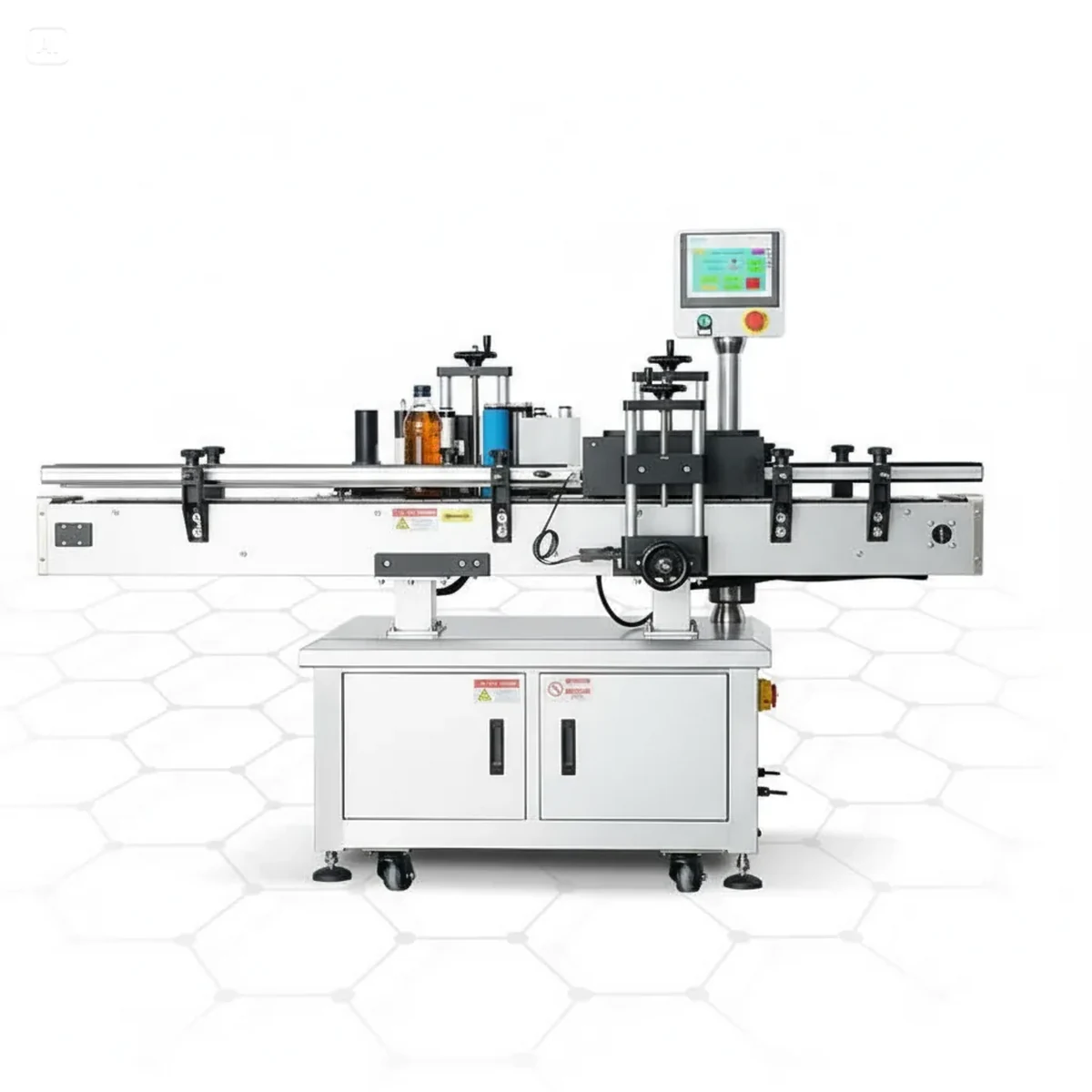
Orientation brief
Orientation is not a generic machine option. Its feasibility depends on whether every production container presents a repeatable feature that can be detected and controlled before the label is applied.
| Reference | What to establish | Trial concern |
|---|---|---|
| Mould seam or structural feature | Whether the feature is present and repeatable on every approved container. | Variation between cavities, suppliers and container batches. |
| Cap, handle or closure feature | Whether the closure is applied in a predictable angular position. | Closure torque and thread start may change final orientation. |
| Printed mark or existing decoration | Contrast, size, position and whether the detector can see it at production speed. | Print variation, reflections and container rotation. |
| Embossment or recessed panel | Physical repeatability and a practical sensing or mechanical registration method. | Container flexibility, tolerance and guide access. |
| No repeatable feature | Whether ordinary wraparound placement is acceptable without angular registration. | Orientation cannot be guaranteed from an undefined reference. |
Buyer question
Registered wraparound labelling controls the label position relative to a repeatable feature on the round container rather than applying from an arbitrary angular position. The feature might be a seam, mark, embossment or other reference, but it must be detectable and consistent enough for the orientation method and acceptance tolerance.
The normal label-gap sensor still controls label dispensing. Product orientation is a separate function that controls where the bottle is before or during application.
Buyer question
A wraparound label may be aligned to a mould seam when the seam is consistently present, detectable and accessible to the proposed orientation method. The seam position can vary between container moulds or suppliers, so production samples from the complete approved range are needed before any tolerance or method is confirmed.
State whether the seam should sit under the label, at the label join or at a defined angle from the artwork. The artwork and seam guide helps define the finished requirement.
Buyer question
Orientation can be based on a mechanical feature or a detectable optical reference, depending on the container and machine architecture. A sensor or vision method needs sufficient contrast and a clear view, while a mechanical method needs a repeatable physical feature that can be engaged without damaging or destabilising the pack.
Reflective, transparent or printed containers should be tested under representative lighting. Do not assume that a feature obvious to an operator will be reliable to an automatic detector.
Buyer question
No. A clear-label sensor is used to identify labels or gaps on the backing web. Bottle orientation requires a separate reference on the product and a method to detect and control it. Both functions may be needed in one project, but they solve different parts of the application sequence.
Use the label sensor guide for web detection and this guide for container registration.
Buyer question
Test orientation by defining a datum on the container and a datum on the applied label, then measuring their relationship across a representative run. Record container batch, feature variation, label roll, operating speed, starts, restarts and any rejected packs. A single visually convenient sample is not a valid production result.
Quotation checklist
Mark the required relationship directly on photographs or controlled drawings and send representative physical samples.
Quick enquiry
Include container diameter, label size, material, target output and whether the label is paper, film or transparent. Lancing can recommend a suitable semi-automatic, compact or automatic configuration.
Phone: 01494 623015
Email: sales@lancinguk.com
Show the feature you want the label to align with, then ask whether that feature can be used consistently on the production containers. Include examples from the suppliers or batches expected to run. Keep a desired artwork relationship separate from evidence that the proposed system can detect and retain the required orientation.
Where the reference is on a cap rather than the bottle, describe the upstream closing process and the finished cap positions it produces. Ask the project team to review the entire relationship before assuming a body label can be registered to every closure feature.
Ask the supplier and packaging team to compare alternatives, such as a different reference or a revised artwork requirement. Record the decision and any additional process needed rather than accepting an unproven registration claim.