
Accurate placement
Consistent wrap around cylindrical containers with simple mechanical adjustment.
Semi-automatic wraparound labelling machines
Bench-top round bottle label applicator with integrated date coder option. Ideal for small batches: the operator places the bottle, activates the foot pedal and the machine wraps and prints in one cycle.
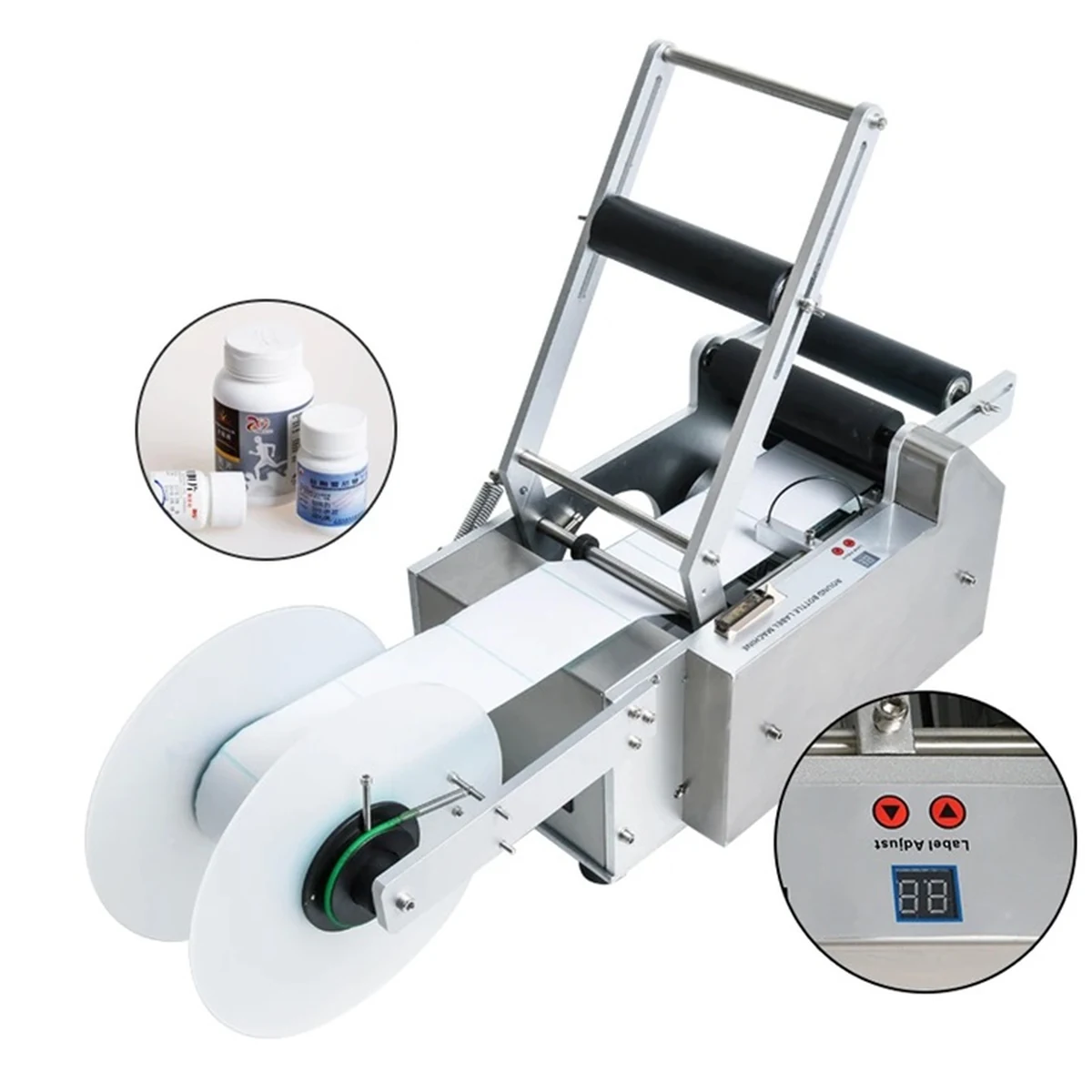
Machine overview
Bench-top semi-automatic round bottle label applicator with optional integrated date coding for small batches and frequent changeovers.
For best results, Lancing reviews your container samples, label roll specification, product handling requirements, and existing line layout before confirming the machine configuration.
Key features
Feature availability varies by model and final configuration. We will confirm all options when quoting your project.
Consistent wrap around cylindrical containers with simple mechanical adjustment.
Integrated coder can print lot or date details inline where specified.
Guides and label sensor can be adjusted in minutes for frequent product changes.
Metal-frame construction for stable bench operation.
Clear controls and pedal operation support low-training production.
A practical entry point for startups, seasonal producers and pilot lines.
Technical specifications
Actual machine dimensions, speed and options are confirmed against the final build and sample tests.
Typical applications
Bottles, jars, cans and retail packs requiring clean front-facing presentation.
Shampoos, lotions, cleaners, sprays, sanitiser and personal care products.
Vials, nutraceutical bottles, OTC packs and industrial cylindrical containers.
Configure your machine
We will review bottle dimensions, label roll, label material, target speed, date-coding needs and line integration before recommending the final build.
Quick enquiry
Include the container diameter, label size, material, target output and whether the label is paper, film or transparent. We will recommend the most suitable semi-automatic, compact or fully automatic configuration.
Phone: 01494 623015
Email: sales@lancinguk.com
Bench-top application
The machine is semi-automatic because the operator presents and removes each container; it is bench-top because of its compact physical format.
For each cycle, the operator places a round container onto the support rollers, positions it against the guide and activates the foot switch. The container rotates while the pressure-sensitive label is dispensed and wrapped around the body. Where the coding option is selected, the code is printed as part of the label-handling cycle. The method is well suited to shorter batches, pilot production and frequent format changes where manual loading is acceptable.
| Verified LT-50D reference | Published range or feature | Trial condition to confirm |
|---|---|---|
| Output | Approximately 25–50 containers per minute, operator dependent. | Measure with the intended operator method, container, label length, coding requirement and finished-pack handling. |
| Bottle diameter | Approximately 15–120 mm. | Test the smallest and largest production containers, including their filled weight, taper and base stability. |
| Label width | Approximately 20–120 mm. | Confirm full label and web dimensions, roll core, outside diameter, winding direction, gap and backing liner. |
| Application accuracy | Approximately ±1 mm under suitable conditions. | Agree the measurement reference, run size and operating rate; inspect skew and seam position as well as label height. |
| Operation | Foot-switch trigger. | Check operator reach, loading sequence, removal of finished packs and safe access around the bench. |
| Coding | Integrated date-printer option. | Confirm print technology, data, print area, label material and code-legibility check. |
| Electrical supply | 110/220 V. | Confirm the selected variant and site connection before order. |
Published ranges are useful screening information, not a substitute for a sample trial. A container near the nominal limit may still be unsuitable if it is sharply tapered, very flexible, unstable on its base or has a label panel interrupted by moulding features. Likewise, the usable label roll is defined by more than label width: the applicator also needs the correct web path, gap, core and winding direction.
Operator and quality control
The operator should place every container against the same reference without twisting or pre-rotating it. A repeatable hand movement and clear finished-pack area help prevent the manual step from becoming the main source of variation.
Set the rollers and guide so the container is supported without excessive pressure. Check that it rotates without lifting, slipping or walking sideways throughout the full wrap.
Sensor compatibility should be confirmed using the production roll. Transparent or low-contrast labels are a specific sample-test requirement; do not assume a standard gap sensor will detect every construction.
Measure the upper and lower label edge from a defined container feature, then record seam offset and skew. Assess a consecutive sample set rather than selecting only the best finished pack.
Document roller spacing, guide position, sensor setting, label path and coder location for each format. Marking or recording settings reduces trial-and-error when a regular product returns to production.
Keep rollers, sensors and the peel area clean and free from adhesive. Inspect the label path, backing take-up and rotating surfaces before a batch, especially after changing label materials.
If manual loading cannot meet the required sustainable rate, compare the compact automatic labeller. If the machine must run continuously between filling and capping, review the fully automatic route. For flat or oval packs with separate front and rear labels, use the specialist front and back labelling range.
Sample trial
Supply representative containers in production condition and a production roll of labels. Include the smallest and largest formats, any clear or film construction, and the exact labels that require date coding. Provide the expected batch size and number of changes per shift.
Time the full load-label-remove cycle, not only the powered rotation. Inspect label height, skew, seam alignment, wrinkles, bubbles, edge lift and code quality across a consecutive run. Record the machine settings and operator method used.
See the sample-testing guide for an evidence checklist. The official Lancing LT-50D reference provides the current first-party overview.
Buyer questions
Yes. Bench-top describes its compact format, while semi-automatic describes the operator-fed cycle started by the foot switch.
The reference ranges are approximately 15–120 mm bottle diameter and 20–120 mm label width. Physical samples are still required to confirm geometry and handling.
An integrated date-printer option is available. The print area, data format and label material should be confirmed during specification.
The operator loads and removes every container, so bottle size, label length, coding and handling method change the sustainable cycle rate.
Transparent labels should be treated as a sample-test requirement. Sensor compatibility depends on the label, liner and gap and must be confirmed for the selected build.
Consider automatic conveying when manual loading limits output, creates excessive handling or prevents the labeller from matching the surrounding production process.
LT-50D workstation
The LT-50D reference combines manual container loading with a powered wrap cycle and foot-switch trigger. Its published performance must be considered together with the bench layout, operator method, label roll and finished-pack handling.
The verified reference covers approximately 15–120 mm bottle diameter, approximately 20–120 mm label width, approximately 25–50 containers per minute under operator-dependent conditions, and approximately ±1 mm placement accuracy under suitable conditions. The selected 110 V or 220 V variant and any integrated date-printer option must be confirmed for the final project.
| Workstation element | Control to establish | Trial evidence |
|---|---|---|
| Container presentation | Use the same loading reference for every bottle and prevent the operator from twisting or lifting the pack during the cycle. | Repeat samples from the smallest, largest and least stable containers, including filled weight where relevant. |
| Operator reach | Position unlabelled containers, the machine and finished-pack area so loading and removal do not require repeated overreach or crossing movements. | Timed complete cycles that include pick-up, loading, foot-switch activation, removal and placement of the labelled pack. |
| Foot-switch operation | Keep the switch stable, accessible and away from accidental activation while preserving a comfortable working posture. | Observation of start consistency and any interrupted or double-triggered cycles during a representative run. |
| Label roll | Record label and web dimensions, gap, core inside diameter, roll outside diameter and winding direction before production labels are ordered. | Threading and changeover record plus sensor performance using the final label and backing liner. |
| Date coding | Confirm data, character size, print position, label material and the check used to accept or reject the code. | Legible coded samples at the intended operator rhythm, including the first packs after a setting or ribbon change. |
| Placement quality | Define the vertical datum, seam position, permitted skew and the treatment of overlap, gap, bubbles, wrinkles and edge lift. | A measured repeat sample at the intended operating rate, not only the first acceptable bottle after setup. |
The approximate ±1 mm reference should be linked to an agreed measurement point, a representative sample size and suitable container and label conditions. Record vertical placement and circumferential seam position separately. A result can appear vertically consistent while still showing skew or a changing seam position around the bottle.
The sample-testing guide provides a suitable evidence structure.
Move the review towards a compact automatic labeller when regular batches justify automatic container sensing and conveying, or towards the fully automatic route when the labeller must balance with filling, capping and downstream handling. Compare accepted output per labour hour, changeover effort and daily production rather than cycle speed alone.
Operator-fed evidence
Loading, orientation, cycle initiation, removal, inspection and pack handling all contribute to sustainable semi-automatic output.
See a cylindrical container rotate during wraparound application and review the trial checklist.
Separate normal operation, changeover, quality approval and technical adjustment.
Use fixed datums for label height, skew and seam rather than visual judgement alone.
Supply the actual label roll construction and run the intended operator method over an agreed consecutive sample. Keep the first pack after start-up and restart within the evidence.
Questions buyers ask
Operator presentation gives a semi-automatic machine flexibility, but repeatability still depends on controlled setup, real samples and a consistent loading method.
The operator controls how the container is presented, while the machine setup and label sensor control the application cycle. Repeatable placement therefore depends on both the mechanical settings and a consistent loading method. Approved samples and setup records help different operators reproduce the same result.
Use the placement quality guide to define the reference.
Bottles should be tested in the condition that represents production whenever filling changes their weight, rigidity, balance or surface. An empty bottle may flex or sit differently between the rollers. If the real product cannot be supplied, agree a safe representative fill and record the limitation.
Yes, when the container range is suitable and the changeover can be controlled efficiently. Short batches benefit from clear format records, segregated label rolls, approved samples and a defined first-off check. The total operator and changeover time should be included when comparing capacity.
The changeover guide covers repeatable format control.
Record the container supports and guide positions, label path, sensor setting, roll orientation, label start position, coding setup and operator loading method. Keep the record with an approved labelled sample and the exact label-roll revision so a later batch can be set up from evidence rather than memory.
Use the artwork and seam guide to define the approved finish.
Operator-fed questions
Bench output and quality depend on how consistently the operator loads, starts, inspects and removes each container.
Accepted output can be limited by container loading, foot-switch timing, label-roll changes, coding, inspection and finished-pack handling. The operator-dependent published range should be confirmed with the actual pack and normal work method.
Clear labels may be possible with a suitable sensor and production-roll trial. The final transparent label, liner, gap and print can behave differently from an opaque sample, so the full roll construction is required.
Ordinary operator placement may provide a manual visual reference, but a repeatable registered result needs a defined locating method and acceptance tolerance. Do not assume an operator can compensate consistently for variable mould seams or closure position.
Consider automation when manual handling limits accepted output, operator consistency, line balance or ergonomics, or when the labeller must exchange signals with filling, capping, coding or inspection equipment.
Operator-fed workstation
The operator's hands, posture, loading sequence and access to moving parts must be considered together. A foot switch does not remove the need for suitable guarding, instructions and safe fault-clearing methods.
Extra manual pressure is not a controlled solution for an incompatible adhesive or contaminated surface. Confirm the label construction and pack condition through a repeatable trial.
Provide the machine identity, bottle and label specification, current settings, exact symptom, recent changes and a safe video of the cycle or finished pack.
Read the safety and PUWER guide, surface-condition guide and service and support guide.