
✓
Food cans
Retail food cans, dry products and cylindrical packs.
Round can labellers
Can labelling normally requires controlled rotation and a clean wrap so the label sits squarely around the cylindrical body. Lancing supplies can labelling machines for food, drink, chemicals and industrial products.
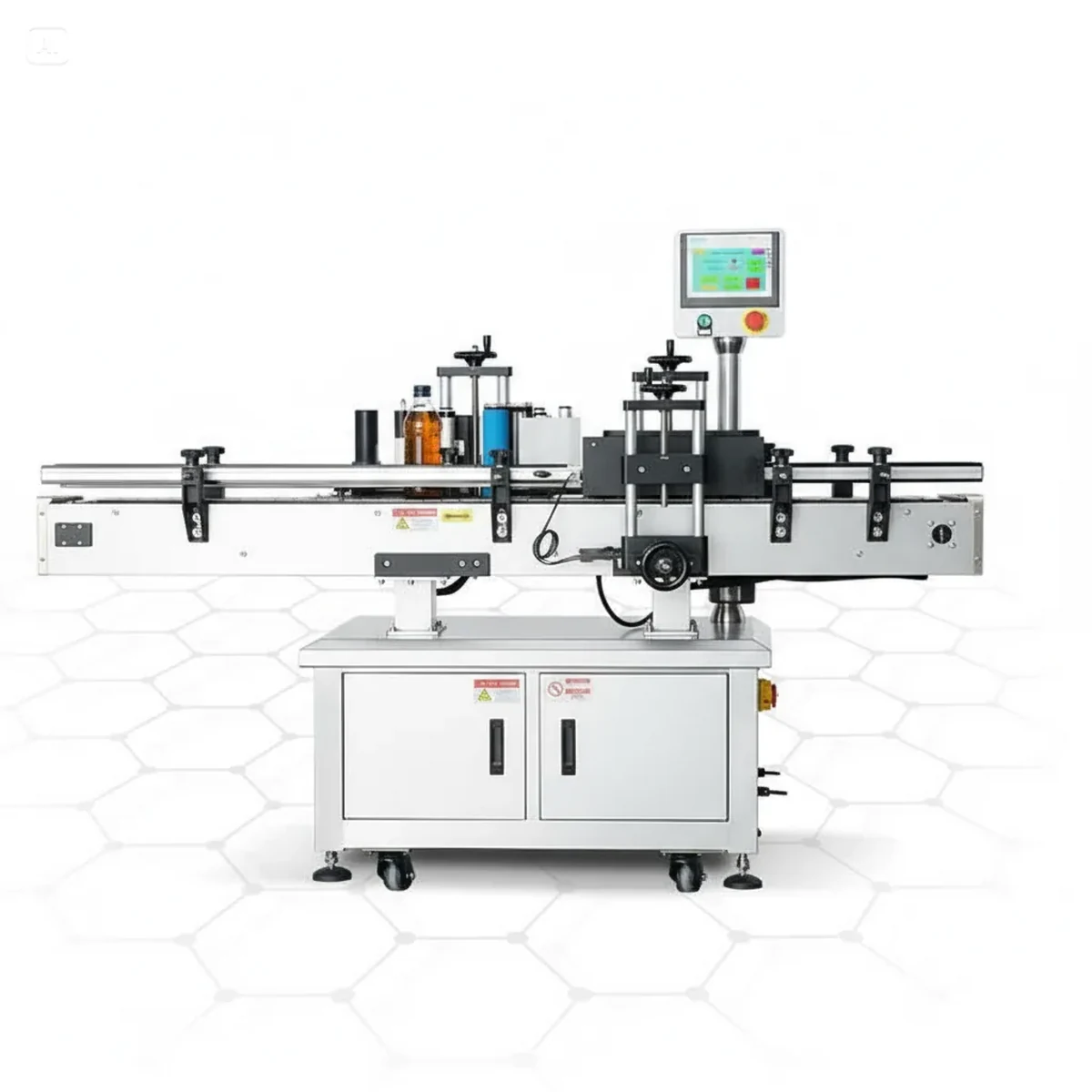
Can applications
Retail food cans, dry products and cylindrical packs.
Round bottles and can-style packs where presentation and repeatability matter.
Lubricants, aerosols where suitable, chemicals and technical product containers.
Practical checks
Diameter controls guide position, roller settings and wrap length.
Metal, plastic and coated surfaces may need sample testing with the chosen label material.
Automatic can labellers can be integrated where continuous production is required.
Questions
Often yes if the products are cylindrical and within the machine adjustment range.
Yes. Semi-automatic bench machines are often used for shorter runs and frequent changeovers.
Date coding or batch coding options can be discussed as part of the full line specification.
Quick enquiry
Include the container diameter, label size, material, target output and whether the label is paper, film or transparent. We will recommend the most suitable semi-automatic, compact or fully automatic configuration.
Phone: 01494 623015
Email: sales@lancinguk.com
Can and cylindrical-pack handling
Metal cans, composite packs and rigid plastic tubs need a stable path through the wrap station and a label panel that remains cylindrical.
Measure the body diameter and usable label height between the top and bottom features. A rolled rim, shoulder, base bead or side seam can interfere with guides or create a local high point beneath the label. If the label is intended to cover a body seam, test whether the face material and adhesive wipe down cleanly without lifting or trapping air.
Thin-wall cans or tubs can distort under excessive guide or wrap pressure. Filled samples help confirm whether the container remains round and stable during transfer and rotation.
Check coatings, dust, oil, moisture and temperature. These conditions can change initial tack and edge adhesion even when the same label performs well on a clean room-temperature sample.
Define the seam position and any orientation requirement. Where a date or batch code is printed, confirm the print area, label material and whether verification is needed after application.
A semi-automatic machine may suit small batches and hand-fed technical products. A compact automatic labeller can support regular runs in a smaller space. For continuous can lines, use the fully automatic route and provide conveyor height, direction, product pitch and accumulation details.
Supply production cans or tubs, final labels and the full label-roll specification for trial. Test a consecutive run at the intended speed and inspect label height, skew, seam variation, wrinkles and edge lift. Where the pack is not cylindrical or needs labels on separate faces, use the wider labelling-machinery range rather than treating it as a round-container application.
Can application checks
Cans and cylindrical metal packs require stable rotation and a label panel that is not interrupted by features that lift or crease the label.
Inspect seams, beads, coatings, dents and the real production surface using the compatibility guide.
Confirm core, web width, full roll diameter and label stiffness using the roll guide.
Define overlap, gap and artwork orientation using the quality guide.
Provide the actual can or cylindrical pack, including any seam, rib, shoulder or base feature. Mark the label panel and show whether the finished label should cover or avoid those features. Use the production surface finish in the trial rather than assuming a plain sample represents a coated or decorated can.
Explain whether the can is filled and closed before labelling and how it reaches the machine. Ask the layout to show spacing, application and discharge with the representative pack weight and dimensions. Keep any industrial or specialist operating requirements explicit in the enquiry.
Yes, as separate formats. Ask for each container, label and setup to be demonstrated or clearly qualified, including the handling changes and tooling required when moving between the can and bottle range.