
○
Cylindrical label panel
Measure the actual label area. Shoulders, bases, mould seams and recessed panels can change contact pressure or force the label onto a tapered surface.
Label quality acceptance
“Straight” and “well applied” are not repeatable acceptance criteria. Define the measurement datum, sample count and visible defects before testing a wraparound label on a bottle, jar or can.
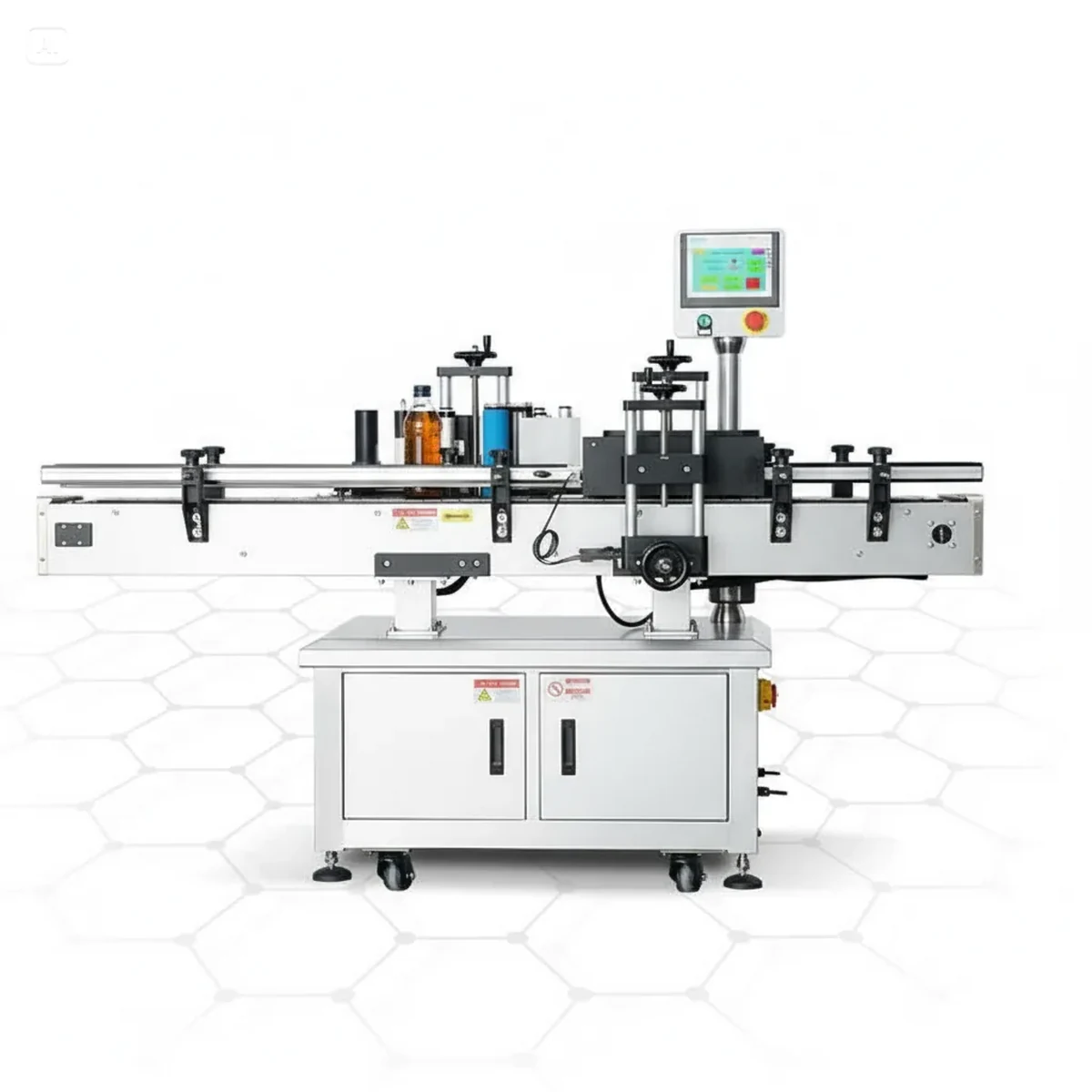
Define acceptance
A label can be at the correct height but still show skew, wrinkles, trapped air or an unacceptable seam. Record each characteristic independently so the machine, container and label can be assessed without subjective language.
| Quality characteristic | Practical measurement | What the record should state |
|---|---|---|
| Vertical position | Measure from one fixed container datum to the same label edge on every sample. | Datum used, measurement points, sample count and accepted range agreed for the project. |
| Skew | Compare the label-edge height at two stated points around the container. | Method, direction of skew and whether the container itself has taper or an uneven base. |
| Seam position | Measure or photograph where the trailing edge finishes relative to a mould mark, artwork feature or chosen reference. | Target seam zone and whether overlap, butt position or a controlled gap is required. |
| Wrap contact | Inspect the complete circumference under consistent lighting. | Wrinkles, bubbles, channels, edge lift, creases and any local loss of adhesion. |
| Artwork orientation | Check the label top, front-facing panel and relationship to closures or container features. | Reference feature and acceptable orientation after normal infeed and restart. |
| First label after a stop | Introduce a controlled stop and inspect the first containers after restart. | Whether label position and web registration recover without unrecorded adjustment. |
Container influence
Measure the actual label area. Shoulders, bases, mould seams and recessed panels can change contact pressure or force the label onto a tapered surface.
Flexible walls, eccentric containers, raised features and inconsistent filled weight can cause rocking or slip as the pack rotates through the wrap station.
Condensation, dust, oil, product residue and release agents can reduce adhesion even when the label is dispensed in the correct position.
Assess the filled or production-condition pack rather than an empty display sample. The label material and bottle surface guide explains how the adhesive interface should be included in the trial.
Trial method
The test should reflect normal threading, start-up, running, stopping and operator interaction.
Consistent height error may point to setup or reference position. Progressive skew may be associated with taper, web tracking or changing container contact. Random wrinkles can be linked to unstable rotation, surface contamination or a label construction that is not conforming to the pack. Change one controlled variable at a time and retain the evidence.
Use the sample and acceptance testing guide to plan the run and the troubleshooting guide to investigate a repeatable fault.
Quick enquiry
Include container diameter, label size, material, target output and whether the label is paper, film or transparent. Lancing can recommend a suitable semi-automatic, compact or automatic configuration.
Phone: 01494 623015
Email: sales@lancinguk.com
Orientation questions
A label can meet its height and skew limits but still fail when the artwork or seam must align to a product feature.
Placement usually describes height, skew, seam, overlap or gap on the container. Orientation describes the angular relationship between the label and a repeatable bottle feature. A project may need one or both measurements.
It may be possible if the mould seam is repeatable and the container can be oriented reliably. Samples from every relevant mould or supplier should be tested because seam position and visibility can vary.
A good reference is present on every pack, consistent in position, detectable at the required rate and not changed by normal closure or filling variation. A feature visible to a person is not automatically suitable for a sensor.
Define the container datum, label datum, permitted relationship, measurement method and response. Include deliberately misoriented samples so the inspection and reject boundary can be demonstrated.