
✓
Buying guides
Compare machine types, automation levels and application methods before selecting a labeller.
Knowledge centre
Use this knowledge centre to choose, specify and compare wraparound labelling machines for round bottles, jars, cans, tubs and cylindrical containers. The pages focus on practical buying decisions: container measurement, label roll direction, speed, sensors, integration and common labelling problems.
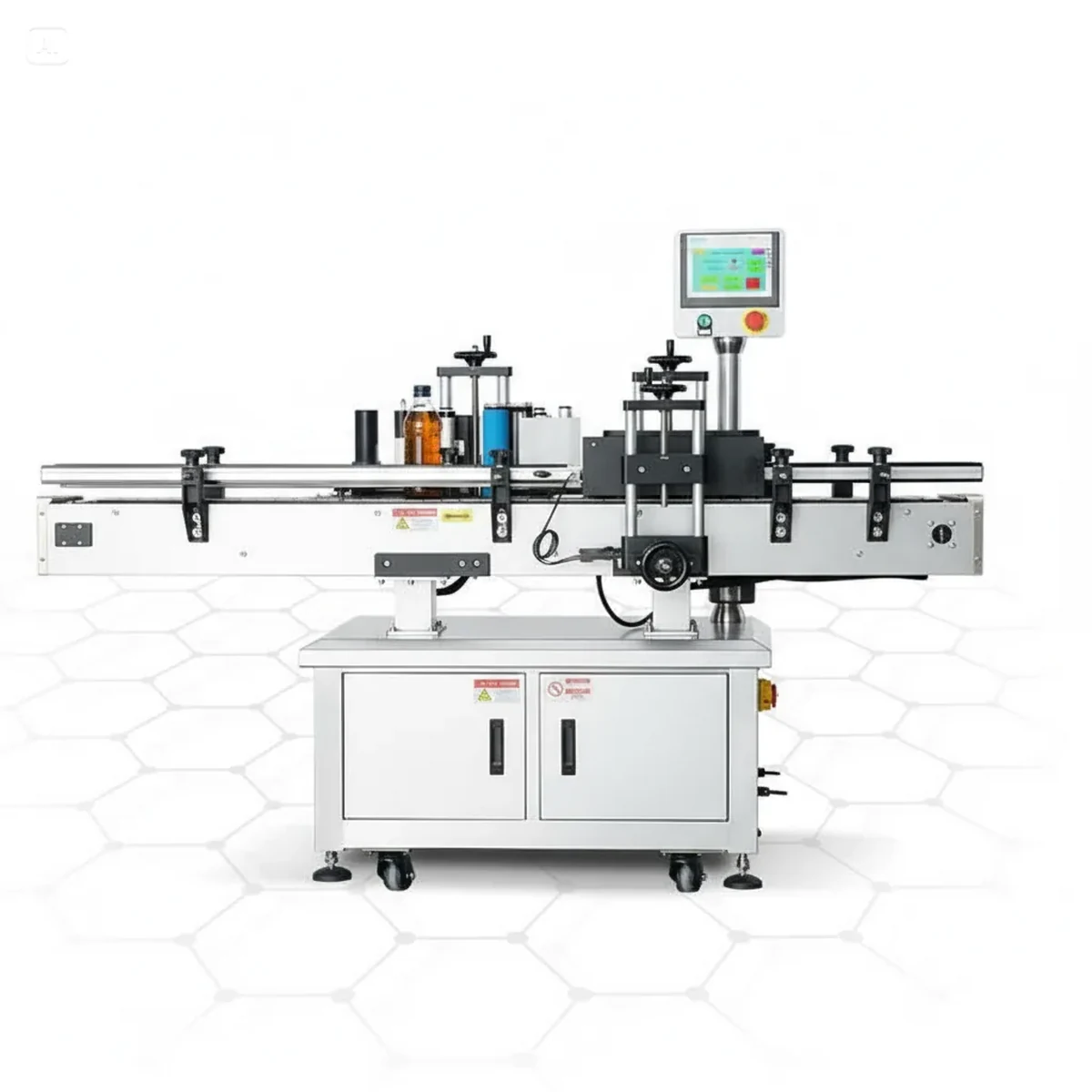
Resource hub
Use this resource map to move from initial machine selection to a complete labelling specification. It brings together container measurement, label-roll setup, sensing, output, integration and fault-finding guidance so buyers can prepare representative samples and accurate quotation information.
Compare machine types, automation levels and application methods before selecting a labeller.
Measure bottles, labels and production needs before asking for a quotation.
Understand common causes of label skewing, wrinkling and poor sensor detection.
Resource map
These pages support high-intent searches from buyers who know they need a labeller but have not yet chosen a machine type.
These pages answer detailed queries that often appear before a quotation request, especially from production managers and engineers.
These guides target practical searches about label quality and machine choice.
Specification advice
Review the actual container shape, diameter, label panel and surface finish. A label applicator works best when the pack is stable and the label area is predictable.
Confirm label material, roll direction, label gap and adhesive before ordering production labels. Clear, film or metallic labels may need extra testing.
Decide whether the operation is batch-fed, compact automatic or part of a conveyorised filling and capping line. The best machine is the one that fits the full process.
Related guidance
Use these guides to compare machine routes, confirm the label and container specification, and prepare the evidence needed for a useful quotation.
Compare bench, compact and automatic routes using container, label, output, changeover and integration requirements.
Collect container dimensions, label-roll data, output, coding and site details before requesting a machine quotation.
Check unwind direction, leading edge and roll presentation before ordering production labels or arranging a trial.
Measure the usable cylindrical panel and estimate label length, seam gap or overlap for a representative sample.
Separate headline cycle rate from sustainable accepted output by allowing for handling, coding, stops and changeovers.
Work through container, roll, sensor, guide and wrap settings when labels skew, wrinkle, bubble or fail to dispense.
Browse selection, setup, sensing, output, integration and troubleshooting guidance for round-container labelling projects.
Review conveyorised wraparound labelling for higher-output round-container lines and upstream or downstream integration.
Review a smaller automatic route for growing production where repeatability is needed without a full-size inline system.
Review operator-fed wraparound labelling for shorter batches, frequent changeovers and limited production space.
Compare bench, semi-automatic, compact and fully automatic wraparound labellers in one range overview.
Send the container, label, output, coding and line details needed for a practical Lancing application review.
Questions
Start with the container diameter, label size, label material, output target and whether the machine needs to run inline with filling or capping.
Yes. They are written for UK manufacturers comparing automatic, compact and semi-automatic wraparound labelling machines.
Yes. The best recommendation usually comes from reviewing container samples, labels, output requirements and line layout.
Technical review
This guide is maintained by Lancing's packaging machinery team. Lancing states that it has specialised in semi-automatic and fully automatic machinery for over 40 years and supports equipment across the UK, Europe and worldwide. Final recommendations are confirmed against actual containers, labels and production targets.
Last technical review: 11 July 2026 · About Lancing · Official company profile
Quick enquiry
Include container diameter, label size, material, target output and whether the label is paper, film or transparent. Lancing can recommend a suitable semi-automatic, compact or automatic configuration.
Phone: 01494 623015
Email: sales@lancinguk.com
Technical topic map
The knowledge centre supports round-container wraparound applications with links to the broader Lancing labelling ranges.
Start with the diameter and label-length guide, roll-direction guide and sensor guide.
Use the buyer’s guide and automatic versus semi-automatic comparison.
Prepare a sample trial and use the output-speed guide to state the test conditions.
Review the coding guide and line-integration guide before final layout and controls are agreed.
Use the maintenance guide and troubleshooting guide to preserve the settings proven during the trial.
Round-container wraparound remains here. Flat and oval front/back work belongs at Front & Back Labelling; broad bottle labelling belongs at Bottle Labellers UK.
Figures in the guides should be read with their stated conditions. Model-dependent ranges and application results are confirmed from current first-party information and physical samples, not inferred from unrelated machines.
Technical library
These additions answer distinct engineering and buyer questions without creating pages for trivial keyword variations.
Measure the complete label roll presented to the machine.
Define measurable finished-pack acceptance.
Recover an approved setup across bench and automatic routes.
Prepare space, utilities, conveyors, controls and commissioning.
Separate application quality from long-term adhesion.
Control frequent formats, customer labels and batch records.
Define role-based competence for setup, running and inspection.
Compare scope without invented or generic pricing.
Watch automatic product handling and prepare a trial.
Watch the bench process and assess operator-dependent output.
Question library
Start with the question closest to the current project stage, then follow the related guidance to turn the answer into a container, label, line or acceptance specification.
Understand the detection, label dispensing, container rotation and wrap-control sequence used to apply pressure-sensitive labels to round bottles, jars and cans.
Plan wraparound label artwork around the seam, overlap or gap, variable-code area, container circumference and production label-roll requirements.
Build a user requirement specification for a wraparound labeller covering containers, labels, output, quality, changeover, integration, documentation and acceptance.
Plan a factory acceptance test for a wraparound labeller using representative containers, label rolls, placement checks, output conditions, coding and records.
Plan single-file bottle spacing, infeed stability, accumulation, start-stop signals and blocked-line behaviour around an automatic wraparound labeller.
Assess roundness, taper, rigidity, seams, base stability and filled condition before specifying a wraparound labeller for bottles, jars, cans or vials.
Advanced technical guides
Use these guides when the project depends on more than ordinary round-container label application.
Compare the two application processes, container requirements, line equipment and trial evidence.
Carry factory evidence into installation, line interfaces, training and installed acceptance.
Align a label or seam to a repeatable bottle feature using a defined reference and trial.
Trace web wander, poor release, liner breaks and rewind faults through the complete label path.
Define label presence, placement, code verification, tracking and failed-reject response.
Send representative containers, production label rolls, output, coding, inspection and line details.
Environment, safety and support
Use these guides when production conditions, workplace duties, aftercare or automatic-machine architecture affect the decision.
Define the surface condition, temperature, adhesive evidence and controlled trial for condensation-prone or contaminated packs.
Connect guarding, stop functions, isolation, inspection and training to the installed machine and line.
Retain the information, backups, part references and fault evidence needed to recover accepted production.
Compare the architectures through container control, changeover, accepted output, footprint and line interfaces.