
Small footprint
Fits tight spaces and gives small producers a path from bench operation to inline production.
Compact wraparound labelling machines
Compact automatic wrap labeller for round bottles, cans and jars. Based on the LUB150 class platform, it applies single wrap labels with optional date coding, making it suitable for alcohol, disinfectant, condiment and similar round containers.
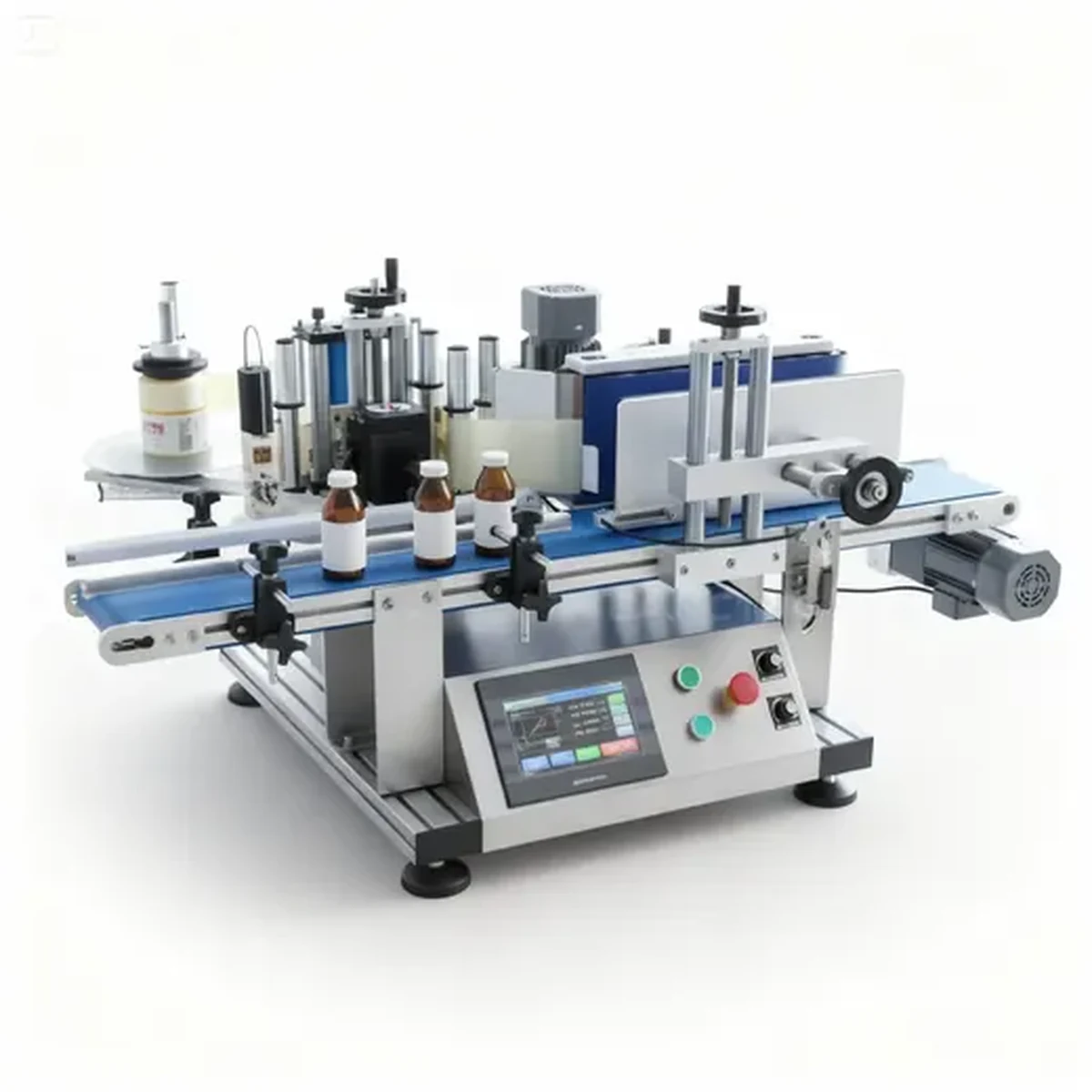
Machine overview
Compact automatic wrap-around labeller for round bottles, cans and jars, suited to small lines and bench-to-line upgrades.
For best results, Lancing reviews your container samples, label roll specification, product handling requirements, and existing line layout before confirming the machine configuration.
Key features
Feature availability varies by model and final configuration. We will confirm all options when quoting your project.
Fits tight spaces and gives small producers a path from bench operation to inline production.
Drive-synchronised label dispense helps keep labels smooth and repeatable.
Thermal date or batch code integration available on suitable labels.
Suitable for wine, cans, disinfectant bottles and many other cylindrical containers.
Speed and sensor adjustments for practical daily operation.
A cost-effective automatic labelling route for growing businesses.
Technical specifications
Actual machine dimensions, speed and options are confirmed against the final build and sample tests.
Typical applications
Bottles, jars, cans and retail packs requiring clean front-facing presentation.
Shampoos, lotions, cleaners, sprays, sanitiser and personal care products.
Vials, nutraceutical bottles, OTC packs and industrial cylindrical containers.
Configure your machine
We will review bottle dimensions, label roll, label material, target speed, date-coding needs and line integration before recommending the final build.
Quick enquiry
Include the container diameter, label size, material, target output and whether the label is paper, film or transparent. We will recommend the most suitable semi-automatic, compact or fully automatic configuration.
Phone: 01494 623015
Email: sales@lancinguk.com
Compact automation
This route automates container sensing, label dispensing and wrap application within a smaller production footprint.
A compact automatic labeller is useful when hand loading has become the main constraint but a full integrated line is not yet required. Containers travel through a short infeed and discharge arrangement, allowing the application cycle to be repeated without an operator positioning every bottle on a set of rollers. The format can suit growing manufacturers, regular batches and production areas where floor space is limited.
The current compact reference handles round bottles, jars and cans, uses 110/220 V variants and can be configured for standard or transparent labels with the appropriate sensor. A date or batch coder is an available option. Its output is model and application dependent, so the useful question is not the highest possible speed but whether the machine can sustain the required rate with the production container, label and operator workflow.
| Specification area | Verified compact reference | Project information to supply |
|---|---|---|
| Containers | Round bottles, jars and cans. | Diameter and height range, straight label panel, taper, rigidity, base stability and filled weight. |
| Labels | Standard or transparent pressure-sensitive labels with the suitable sensor. | Label and web dimensions, gap, face material, backing, core diameter, roll outside diameter and winding direction. |
| Output | Model and application dependent. | Normal and peak rate, batch size, changeovers, operator tasks and downstream capacity. |
| Coding | Date or batch-coder option. | Required data, print area, material compatibility, character size and verification method. |
| Integration | Basic infeed and discharge. | Available footprint, working height, future conveyor connection and product transfer at entry and exit. |
| Controls | Touchscreen or panel, depending on selected model. | Recipe needs, operator access, speed adjustment and any future start/stop interface. |
Practical operation
Container guides should support the pack without squeezing flexible walls or allowing the base to wander. The product must reach the sensor and wrap station with a repeatable position and enough space from the next container.
Wrap quality depends on the contact surfaces rotating the container evenly while the label is dispensed. A tapered or strongly textured label panel may cause skew, wrinkles or an inconsistent seam and should be trialled.
Paper and opaque labels are generally easier to detect than transparent or low-contrast constructions. The sensor should be selected and set using the production roll, including its backing liner and actual label gap.
Record guide positions, sensor location, label path and speed settings for each format. Check both the smallest and largest planned container and label so that the adjustment range is proven before ordering.
Leave enough space to load the label roll, thread the web, remove waste backing, clear a stopped container and clean contact surfaces. A small machine still needs a practical working envelope.
Keep sensors, drive rollers, peel plate and wrap-contact surfaces free from dust and adhesive. Inspect guides and rotating parts for wear so that a setting recorded during commissioning remains repeatable.
A compact machine is not automatically the best choice for every small batch. Where formats change frequently and an operator can load every container, the semi-automatic bench route may be simpler. Where the labeller must match a continuous filling and capping line, compare the fully automatic system. Flat or oval packs requiring separate panels belong with front and back labelling machinery.
Sample trial
Send samples representing every diameter, height, surface and label construction. Filled samples are preferable when product weight or container flex changes stability. Include the intended production roll, not only loose labels, because unwind, backing and winding direction are part of the application.
Agree how label height, skew, seam position, wrinkles, bubbles and edge lift will be judged. Run enough consecutive containers to assess repeatability at the intended rate and record settings for changeover. See the testing guide for a practical evidence plan.
The official Lancing compact wraparound reference confirms the current platform features and available options.
Buyer questions
It is useful when regular batches justify automatic conveying and reduced handling, but the production area or line does not require a full-size integrated labeller.
Transparent labels can be considered with a suitable sensor. The production label and backing liner should be tested because low contrast changes detection.
A date or batch-coder option is available. Print technology and position should be confirmed against the label material, required data and operating speed.
Guides, sensors, the label path and speed are adjusted to suit the format. Recording repeatable settings and testing the extremes of the range makes future changes more reliable.
Choose the larger automatic route where the labeller must sustain a balanced filling and capping line, exchange controls signals or provide more advanced handling and inspection.
Provide container and label dimensions, roll details, production samples, normal and peak output, coding needs, available space and any planned line connection.
Compact route boundary
A compact machine can automate container detection, label dispensing and wrap application in a smaller footprint. The project still needs a defined method for presenting containers, removing finished packs, changing rolls and controlling any coder.
| Project condition | Compact automatic route | When to review a fuller automatic line |
|---|---|---|
| Container supply | Suitable where an operator or simple upstream process can place stable round containers onto the infeed at a controlled spacing. | Review fuller automation when containers arrive continuously, require automatic separation or need accumulation after upstream stops. |
| Discharge | Suitable where labelled containers can be collected or transferred without creating back-pressure at the wrap station. | Review conveyors, accumulation or downstream control when finished packs must feed directly into inspection, packing or another machine. |
| Production pattern | Useful for repeated batches that justify automatic application but still value a small footprint and practical changeover. | Review an integrated automatic route when sustained line balance, unattended transfer or coordinated fault handling is essential. |
| Label construction | Standard or transparent pressure-sensitive labels can be considered with the suitable sensor and a production-roll trial. | Review the complete application when label material, very small gaps, unusual die cuts or container surface variation create repeated sensing or wrap-quality risk. |
| Coding | A date or batch-coder option can be assessed where the print area and material are compatible. | Review additional controls or specialist equipment when code verification, automatic reject or unique variable-data labels are required. |
| Future growth | Confirm infeed, discharge, working height and controls so the selected compact build does not block a planned production upgrade. | Choose a full-line specification where future filler, capper or inspection integration is already a defined requirement. |
Supply label width and length, web width, gap, face material, backing liner, core inside diameter, roll outside diameter and winding direction. Transparent labels should be tested as a complete production roll because the sensor sees the combination of label, liner and gap. Record missed detections, double feeds and label-start consistency rather than relying on a single successful cycle.
Use the label sensor guide for the test matrix.
Identify the smallest, largest and least stable containers, the widest and longest labels, and the format changed most often. A practical trial should include guide adjustment, label-roll threading, sensor setting, coder setting where fitted and verification of the first accepted pack after changeover.
The diameter and label-length guide and specification checklist help organise this information.
Compact project readiness
A compact automatic route still needs production-roll clearance, reliable sensing, stable transfer and enough operator access for roll changes and cleaning.
Where the project may grow into a larger line, include the future conveyor direction, height and controls boundary now. The quotation factors guide helps compare a compact machine with a wider integrated scope.
Questions buyers ask
Compact automation sits between operator-fed bench equipment and a fully integrated line, so the infeed, discharge and staffing assumptions need to be explicit.
No. A compact automatic labeller moves containers through the application zone automatically, but an operator may still load or collect containers, replenish labels, inspect output, manage coding and complete changeovers. The amount of labour depends on the surrounding infeed, outfeed and batch process.
Compare automation boundaries in the automatic versus semi-automatic guide.
Bottles should enter upright, in single file and with enough spacing for reliable product detection and label application. They should not be pushed through by uncontrolled back pressure. The least stable bottle and the highest planned line rate should be included in the infeed trial.
Use the spacing and line-control guide.
It may use some of the same containers and label rolls, but compatibility is not automatic. Conveyor stability, label presentation, sensor position, product spacing and the wrap mechanism can change the suitable range. Every intended format should be checked against the compact machine rather than assumed from a bench trial.
Start with the format specification checklist.
A compact labeller may be unsuitable when containers are unstable, strongly tapered, require orientation, need complex inspection or cannot be fed and discharged reliably in the available space. A higher-output line may also need more accumulation, controls and access than a compact frame can provide.
Compare the full range in all wraparound labellers.
Compact-line questions
A compact labeller reduces floor space, but it still needs stable product presentation, label-web control and a defined discharge process.
Yes. Each container must reach the sensing and application zone as a separate stable pack. The spacing method may be simple, but it must suit the bottle diameter, stability and required output.
It may be integrated when conveyor height, direction, transfer, speed, accumulation and controls are compatible. Provide the current layout and surrounding equipment before treating a compact standalone machine as a direct inline replacement.
The backing liner must remain controlled as the waste roll grows. Slip, poor core grip or changing tension can affect web tracking and dispensing even when the machine footprint is small.
Trial the smallest, largest and least stable containers, the longest label, the production liner and any clear-label or coding requirement. Include normal infeed and finished-pack removal rather than judging one hand-presented sample.
Compact-line readiness
No. The layout still needs safe roll loading, cleaning, adjustment, isolation and maintenance access without blocking routes or creating unsafe reach across moving equipment.
Machine suitability and adhesive suitability must both be proven with production-condition containers and the final label construction. A dry demonstration pack is not enough.
Use the installed configuration and supplier documentation to identify verified wear and critical parts; avoid relying on a generic spare kit without part numbers.
Use the surface-condition guide, safety guide and support guide.