
✓
Semi-automatic
Best for short runs, lower budgets and frequent product changes.
Buyer guide
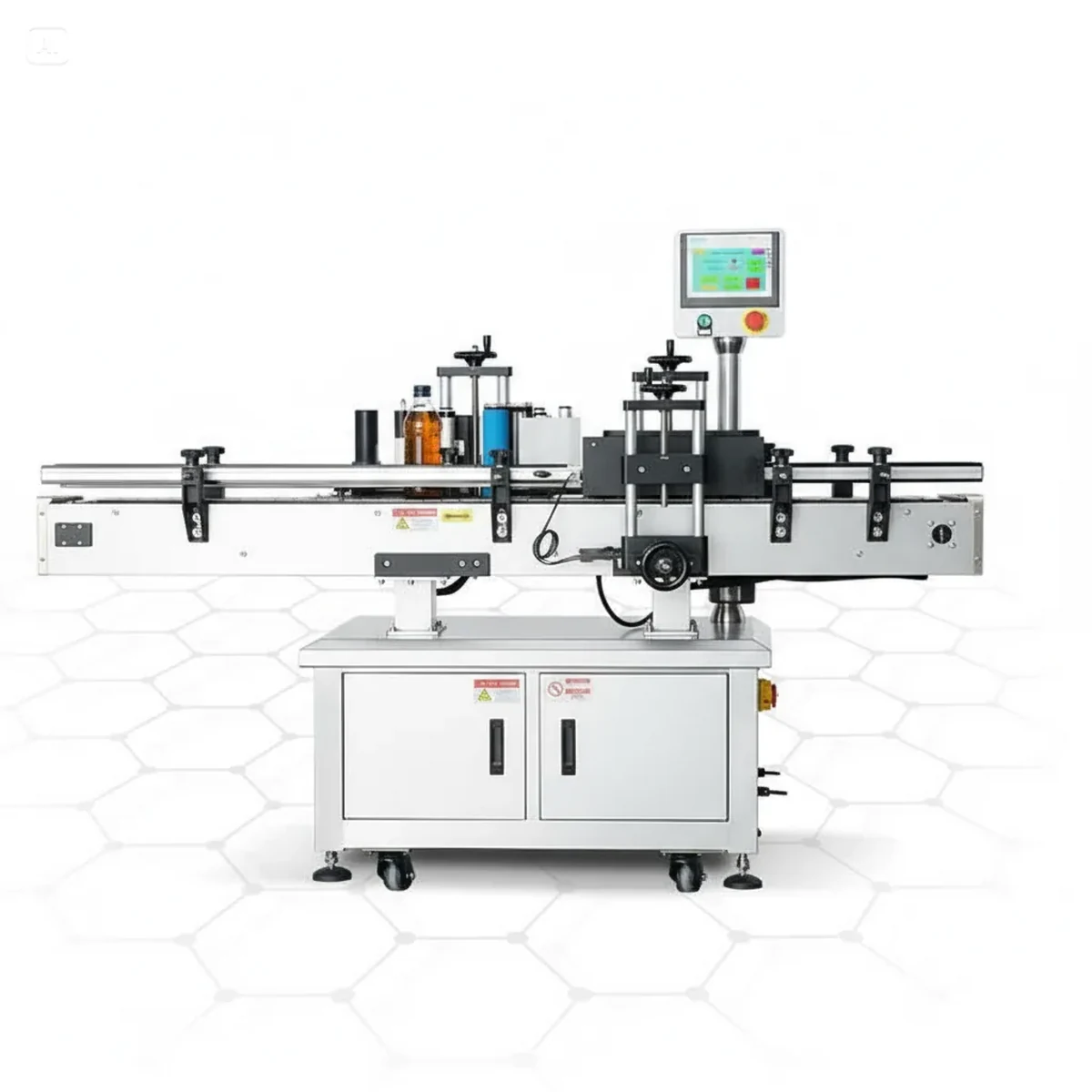
The main choice in bottle labelling is whether to use an operator-fed semi-automatic machine or a conveyor-fed automatic labeller. The answer depends on output, labour cost, batch size, product range and future growth.
Best fit
Best for short runs, lower budgets and frequent product changes.
Best when batches are growing but space is limited.
Best when labelling must match a continuous production line.
Specification points
More containers per hour usually pushes the choice toward automatic machinery.
If operators are spending too long labelling, automation may return value quickly.
If products change often, make sure adjustment and set-up time are considered.
Range comparison
For higher-output conveyorised lines where repeatability and integration are important.
For growing production that needs automation within a smaller footprint.
For operator-fed batches, start-ups and frequent product changeover.
Related labelling searches
Use these related pages to compare machine types, container formats and industry applications.
Compare suitability, specification details and enquiry information.
Compare suitability, specification details and enquiry information.
Compare suitability, specification details and enquiry information.
Compare suitability, specification details and enquiry information.
Compare suitability, specification details and enquiry information.
Compare suitability, specification details and enquiry information.
Compare suitability, specification details and enquiry information.
Compare suitability, specification details and enquiry information.
Compare suitability, specification details and enquiry information.
Compare suitability, specification details and enquiry information.
Compare suitability, specification details and enquiry information.
Compare suitability, specification details and enquiry information.
Compare suitability, specification details and enquiry information.
Compare suitability, specification details and enquiry information.
Compare suitability, specification details and enquiry information.
Questions
No. Semi-automatic labelling can be the better choice for small batches and frequent changeover.
When labour time, consistency or output becomes a constraint.
Yes, many manufacturers take that route as demand grows.
Technical review
This guide is maintained by Lancing's packaging machinery team. Lancing states that it has specialised in semi-automatic and fully automatic machinery for over 40 years and supports equipment across the UK, Europe and worldwide. Final recommendations are confirmed against actual containers, labels and production targets.
Last technical review: 11 July 2026 · About Lancing · Official company profile
Quick enquiry
Include the container diameter, label size, material, target output and whether the label is paper, film or transparent. We will recommend the most suitable semi-automatic, compact or fully automatic configuration.
Phone: 01494 623015
Email: sales@lancinguk.com
Decision evidence
Automatic and semi-automatic labellers solve different handling problems, so the comparison should include labour, changeover, line balance and future formats.
| Decision point | Semi-automatic route | Automatic route |
|---|---|---|
| Container movement | An operator loads and removes every container. | A conveyor and sensors present containers to the application station. |
| Best production pattern | Shorter batches, pilot production and frequent manual changes. | Regular or continuous production where manual presentation limits output. |
| Output test | Time the full load, label, code and remove sequence with the intended operator method. | Run with representative spacing, coding, accumulation and downstream capacity. |
| Changeover | Can be practical where many products use a common roller and guide range. | May benefit from recorded recipes, but guides, sensors and label paths still require physical adjustment. |
| Integration | Normally a stand-alone work cell. | Can exchange product flow and controls signals with filling, capping, coding and inspection equipment. |
Use the normal daily production requirement rather than a single peak order. Include label-roll changes, replenishment, cleaning, format changes and the time required to check the first packs after an adjustment. A semi-automatic machine can be efficient when the operator is already present and batch sizes are modest. Automatic handling becomes more valuable when container presentation is repetitive, the line must run continuously or manual loading prevents the wider process reaching its target.
Compare the LT-50D semi-automatic route, compact automatic route and fully automatic route using the same container and label samples. The sample-testing guide sets out a consistent evidence method.