
✓
Labour time
Estimate current minutes spent hand labelling each batch.
ROI guide
A labelling machine investment is usually justified by labour reduction, more consistent output, less rework and the ability to scale production. This guide explains how to think about return on investment.
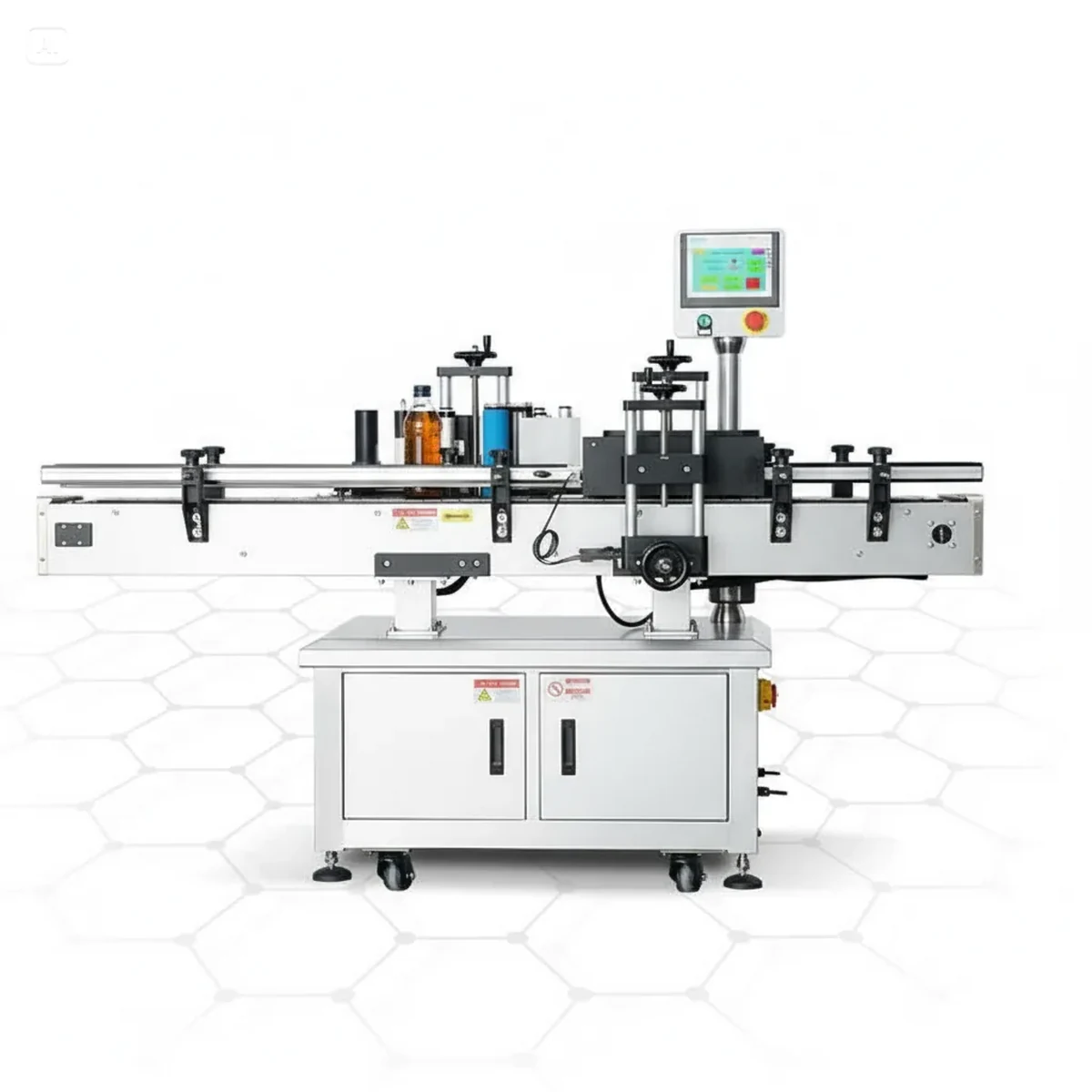
Buying guide
The payback calculation should include more than the machine price. Manual labelling uses labour, creates variation and can limit output. Automated or semi-automated labelling can improve consistency and free staff for higher-value production tasks.
Estimate current minutes spent hand labelling each batch.
Include wasted labels and rejected packs caused by poor placement.
Consider future output and whether the machine prevents a production bottleneck.
Practical comparison
| ROI factor | How to estimate it | Why it matters |
|---|---|---|
| Labour saving | Hours saved per week x labour cost | Direct payback component |
| Label waste | Rejected labels and products per batch | Quality cost |
| Output capacity | Extra products labelled per hour | Revenue and throughput |
| Brand presentation | More consistent shelf appearance | Supports sales and repeatability |
| Changeover time | Downtime between SKUs | Important for varied product ranges |
Specification advice
Review the actual container shape, diameter, label panel and surface finish. A label applicator works best when the pack is stable and the label area is predictable.
Confirm label material, roll direction, label gap and adhesive before ordering production labels. Clear, film or metallic labels may need extra testing.
Decide whether the operation is batch-fed, compact automatic or part of a conveyorised filling and capping line. The best machine is the one that fits the full process.
Related guidance
Use these guides to compare machine routes, confirm the label and container specification, and prepare the evidence needed for a useful quotation.
Browse selection, setup, sensing, output, integration and troubleshooting guidance for round-container labelling projects.
Compare bench, compact and automatic routes using container, label, output, changeover and integration requirements.
Collect container dimensions, label-roll data, output, coding and site details before requesting a machine quotation.
Check unwind direction, leading edge and roll presentation before ordering production labels or arranging a trial.
Measure the usable cylindrical panel and estimate label length, seam gap or overlap for a representative sample.
Separate headline cycle rate from sustainable accepted output by allowing for handling, coding, stops and changeovers.
Work through container, roll, sensor, guide and wrap settings when labels skew, wrinkle, bubble or fail to dispense.
Browse selection, setup, sensing, output, integration and troubleshooting guidance for round-container labelling projects.
Review conveyorised wraparound labelling for higher-output round-container lines and upstream or downstream integration.
Review a smaller automatic route for growing production where repeatability is needed without a full-size inline system.
Review operator-fed wraparound labelling for shorter batches, frequent changeovers and limited production space.
Compare bench, semi-automatic, compact and fully automatic wraparound labellers in one range overview.
Questions
No. Consistency, labour saving, reduced rejects and future scalability also matter.
Yes, especially when hand labelling is slow or inconsistent.
It is sensible to consider growth, but avoid unnecessary complexity that does not fit your current production.
Technical review
This guide is maintained by Lancing's packaging machinery team. Lancing states that it has specialised in semi-automatic and fully automatic machinery for over 40 years and supports equipment across the UK, Europe and worldwide. Final recommendations are confirmed against actual containers, labels and production targets.
Last technical review: 11 July 2026 · About Lancing · Official company profile
Quick enquiry
Include container diameter, label size, material, target output and whether the label is paper, film or transparent. Lancing can recommend a suitable semi-automatic, compact or automatic configuration.
Phone: 01494 623015
Email: sales@lancinguk.com
Cost model
The useful comparison includes labour, accepted output, changeover, rejected packs, downtime and the capacity needed for future demand.
| Cost or benefit | How to measure it | Common omission |
|---|---|---|
| Direct labour | Operator time for loading, labelling, inspection, roll changes and finished-pack handling. | Counting only the powered machine cycle. |
| Accepted output | Good labelled containers per paid production hour under normal conditions. | Using a short maximum-speed demonstration. |
| Changeover | Time from the last accepted pack of one format to the first accepted pack of the next. | Ignoring sensor, coder and quality checks. |
| Quality loss | Labels, containers and rework time lost to skew, wrinkles, poor codes or handling damage. | Valuing only the label stock. |
| Line downtime | Time when filling or capping cannot run because labelling is unavailable or unbalanced. | Assessing the labeller independently of the line. |
| Growth capacity | Forecast demand supported without another handling step or replacement machine. | Buying unused complexity without a credible volume plan. |
Build separate scenarios for the semi-automatic, compact and fully automatic routes using trial data from the same container and label. Include capital cost, installation, options, utilities, maintenance and any conveyor or guarding work. Do not publish or rely on a payback period until the underlying production figures have been verified for the application.
The output-speed guide explains sustainable-rate testing, while the automation comparison identifies the operating differences that affect labour and integration.