
Machine evidence
- Label detection and dispense remain stable.
- The container rotates without slipping.
- Wrap pressure is even and placement is repeatable.
- The seam, height and skew meet the agreed method.
Surface condition and adhesion
Pressure-sensitive label performance depends on the surface that the adhesive contacts at the moment of application and during the period afterwards. Condensation, wash water, oil, dust, product residue, release agents and low container temperature can all change adhesion or allow the label to move.
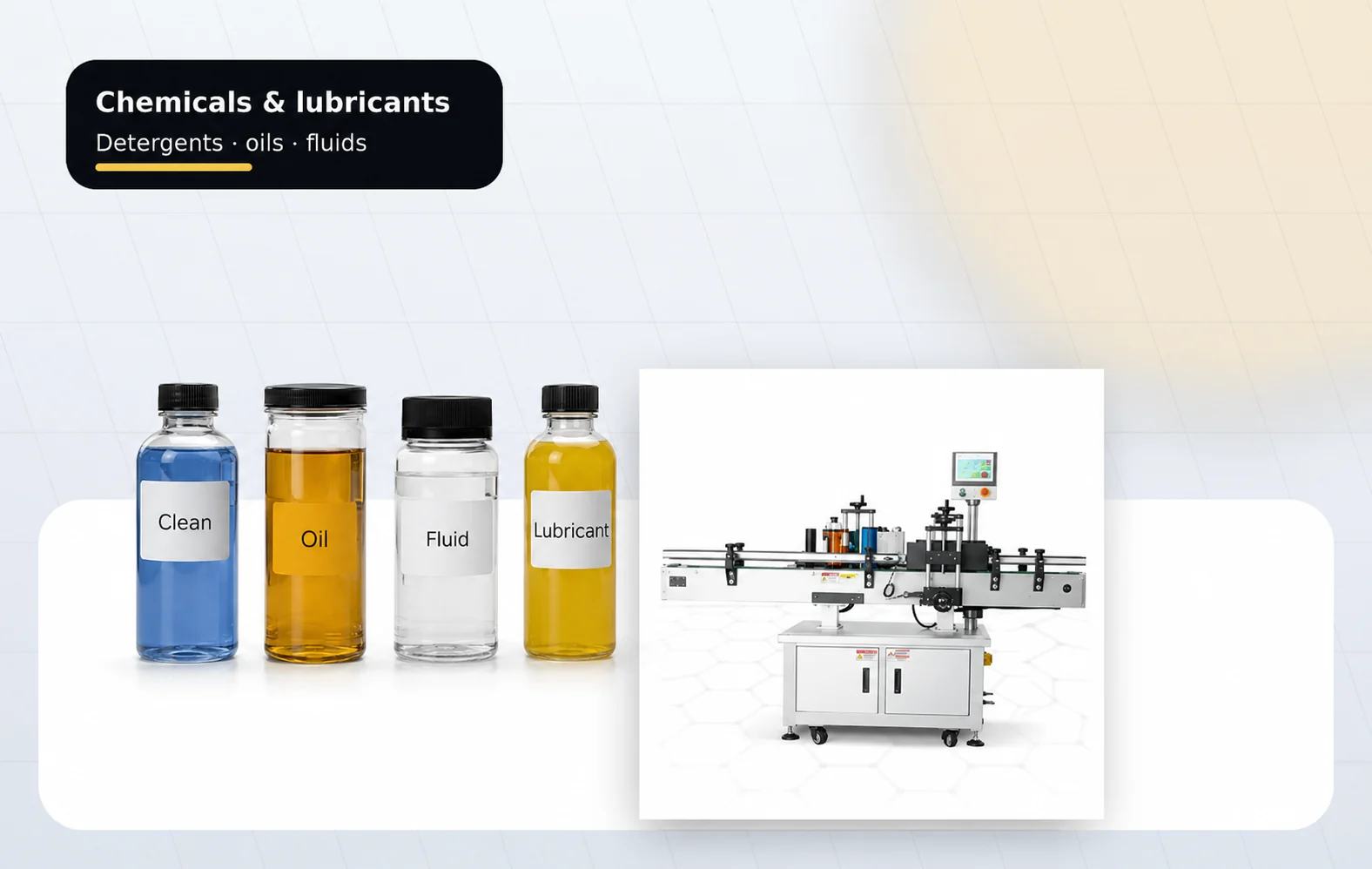
Surface condition
The labeller can position and wrap the label, but long-term adhesion depends on the label construction, adhesive, surface chemistry, temperature, contamination and dwell conditions. Test the final filled pack rather than a clean empty sample kept in an office.
| Production condition | Why it matters | What to reproduce in the trial |
|---|---|---|
| Cold container and condensation | Moisture can form again after wiping, while low application temperature can change initial tack. | Actual container temperature, room humidity, delay after filling and the final production label construction. |
| Rinse or wash water | Residual water, detergent or mineral deposits can interrupt adhesive contact. | Normal rinse, drying method and time from rinse to label application. |
| Oil or lubricant residue | A thin film can allow movement, edge lift or poor wet-out even when the bottle looks clean. | Filled packs from the real process, including the defined cleaning standard. |
| Food or cosmetic product residue | Sauces, creams, fragrance oils and powders can contaminate the label panel during filling or handling. | Worst credible spill pattern, cleaning method and time before labelling. |
| Dust, powder or release agent | Particles and mould-release residues reduce the effective contact area. | Production containers from different batches, not only a specially cleaned sample. |
Buyer question
Some specialist label constructions are designed for demanding damp or cold conditions, but a standard pressure-sensitive label should not be assumed to work on a visibly wet bottle. The label supplier should confirm the face material and adhesive for the container, application temperature and end-use environment, and the complete pack should be tested under production conditions.
Machine pressure cannot replace compatible adhesive chemistry. If the label is applied through surface water, the pack may appear acceptable immediately and then lift, move or whiten later. Published label-supplier information shows that adhesive systems can be engineered specifically for cold and wet conditions, which is why the final construction—not only the artwork—must be identified during specification.
Temperature and condensation
Whether a chilled bottle should warm before labelling depends on the approved label construction, the available process time and whether condensation will form again before application. Simply wiping the bottle once may not create a stable dry surface if the container remains below the surrounding dew point.
Oil and product residue
Labels can lift or move when oil, product residue, release agent or cleaner remains between the adhesive and the container, or when the chosen adhesive is unsuitable for the surface and end-use conditions. Taper, container flex, label stiffness and excessive web tension can make the visible failure worse, but they are separate variables.
For lubricant, essential-oil and chemical packs, test containers taken from the normal filling process. Record whether the label panel is cleaned, how it is cleaned, how long it is allowed to dry and whether leakage or cap contamination can reach the label after application.
Machine versus material
Labeller settings can improve placement, contact and wrap consistency, but they cannot make an incompatible adhesive suitable for a contaminated, cold or chemically exposed surface. Separate machine-application evidence from later adhesion evidence so the correct party can address the cause.
Controlled trial
Use the label and bottle compatibility guide, sample-testing guide and troubleshooting guide to define the evidence.
Quick enquiry
Include container diameter, label size, material, target output and whether the label is paper, film or transparent. Lancing can recommend a suitable semi-automatic, compact or automatic configuration.
Phone: 01494 623015
Email: sales@lancinguk.com