
Handling differences
- Filled weight and centre of gravity
- Wall rigidity and squeeze response
- Base stability and conveyor behaviour
- Closure height and final pack geometry
Container suitability
A container can look round but still be difficult to wraparound label. Taper, ovality, mould seams, flexible walls, unstable bases and changes caused by filling can alter how the pack rotates through the label application zone. Suitability should be judged at the actual label panel using production-condition samples.
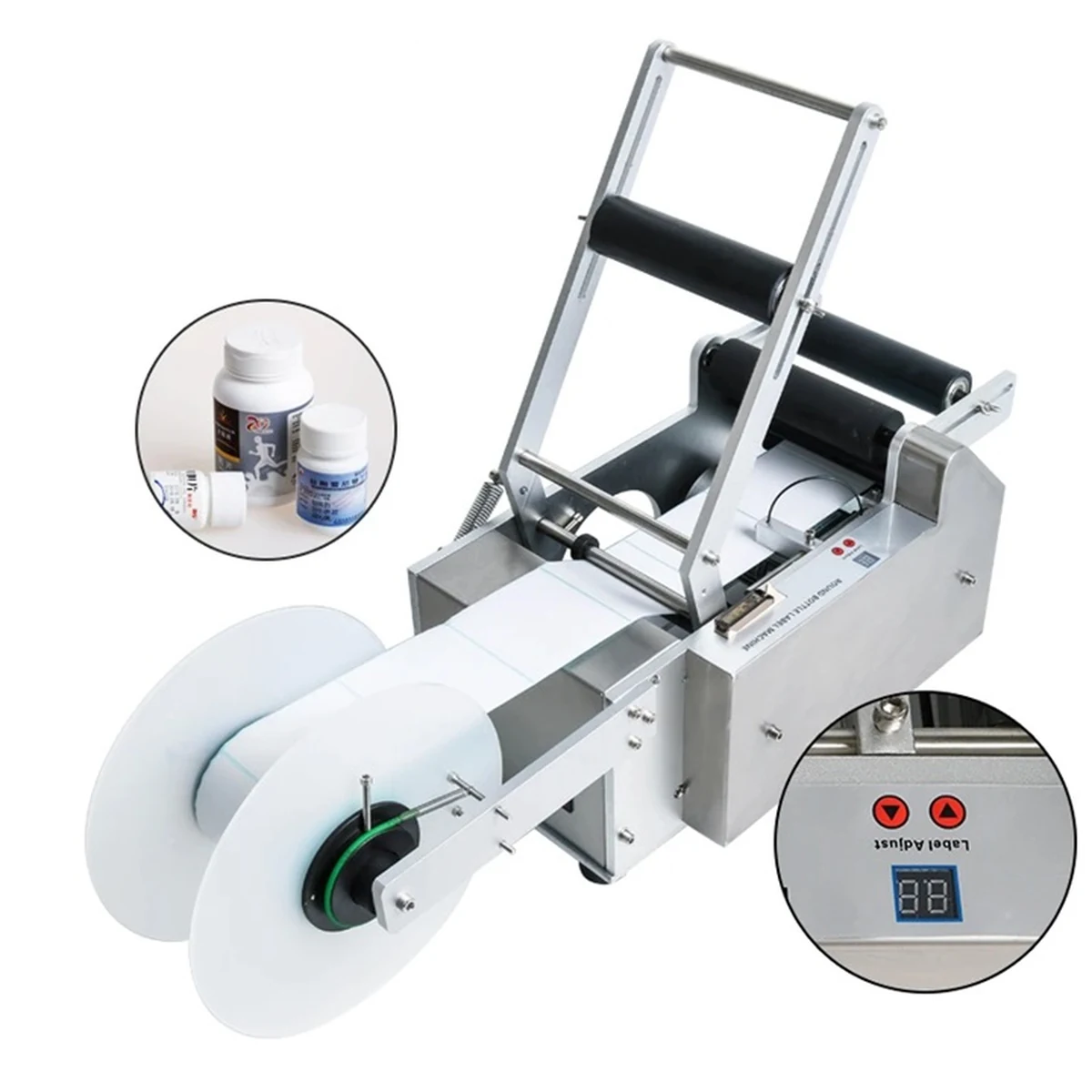
Container evidence
Nominal capacity or a single catalogue diameter does not describe whether the label panel is straight, round and stable enough for repeatable rotation.
| Container feature | Possible effect | What to provide |
|---|---|---|
| Diameter variation or ovality | Changes surface contact and seam position as the pack rotates. | Multiple production samples and measurements around the label panel. |
| Taper | Forces the label edges to travel different circumferences, encouraging skew or wrinkles. | Top and bottom label-panel diameters and a side-view drawing or sample. |
| Rigidity | Flexible walls can deform under wrap or guide pressure. | Empty and filled samples where filling changes wall support. |
| Base and height | Rocking or leaning changes label height and contact. | Least stable closure, base and filled-weight condition. |
| Seams and surface features | Can lift, distort or interrupt the label and wrap contact. | Samples showing mould seams, embossing, texture and intended seam position. |
Buyer question
A round container is suitable when it can be presented upright and rotated through the label panel without rocking, slipping or changing effective diameter excessively. The label area should be sufficiently cylindrical for the chosen label construction, and the base, closure and shoulders should not interfere with guides or the wrap mechanism.
Check the container at the exact height where the label will sit. A bottle may have a round body but a tapered lower panel, recessed waist or mould feature within the intended label area. Provide the complete range, including the format most likely to deform, lean or vary between moulds.
Use the diameter and label-length guide to connect the container measurements to label length.
Buyer question
Container taper means the upper and lower edges of the label travel around different circumferences. A rectangular pressure-sensitive label cannot follow both paths without stress, so it may climb, skew, crease or lift. The severity depends on the taper, label height, label flexibility, adhesive and application control.
Measure the container diameter at the top and bottom of the proposed label panel rather than describing the pack only as “slightly tapered”. A shorter label, shaped label, different material or different application method may be needed, but the correct response must be established with the real container and label supplier.
The artwork and seam guide explains why the applied result must be approved on the curved pack.
Buyer question
A filled container can behave differently from an empty one because weight, wall support, centre of gravity and surface condition may change. Filling can make a flexible bottle more stable, or it can introduce product residue, condensation or distortion. Testing the production condition reduces the risk of accepting a setup that only works with clean empty samples.
Where the actual product cannot be supplied for a trial, agree a safe representative condition and record the limitation.
Buyer question
Mould seams, embossing and raised surface features can interrupt label contact or create a visible line under the label. Closures and shoulders can interfere with upper guides or wrap components, while base rings can affect stability. Their effect depends on their position relative to the label panel and machine contact points.
The label and surface compatibility guide covers material and adhesion evidence.
Buyer question
Another labelling method may be more suitable when the container cannot rotate consistently, the label panel is strongly tapered or irregular, the pack needs separate front and rear labels, or artwork orientation must be controlled on a shaped container. The alternative should be chosen from the actual pack and label requirement rather than from its name alone.
Flat, oval or strongly shaped containers often need front-and-back application rather than a single wrap. Packs needing top, bottom or tamper-evident labels require additional application positions. Variable data printed onto a new label immediately before application may need print-and-apply equipment. Lancing can review the complete pack to identify the correct labelling route.
Compare the underlying choice in the wraparound versus front-and-back guide.
Quick enquiry
Include container diameter, label size, material, target output and whether the label is paper, film or transparent. Lancing can recommend a suitable semi-automatic, compact or automatic configuration.
Phone: 01494 623015
Email: sales@lancinguk.com