UK machinery safety planning

What safety and PUWER questions should be considered for a wraparound labelling machine?

A wraparound labeller should be selected, installed and used as part of the complete workplace and production line. UK workplace-equipment duties require the responsible business to consider suitability, guarding, controls, isolation, maintenance, inspection and competent use for the actual application.

  • Application-specific risk assessment
  • Guarding, stop and isolation review
  • Training, inspection and maintenance evidence
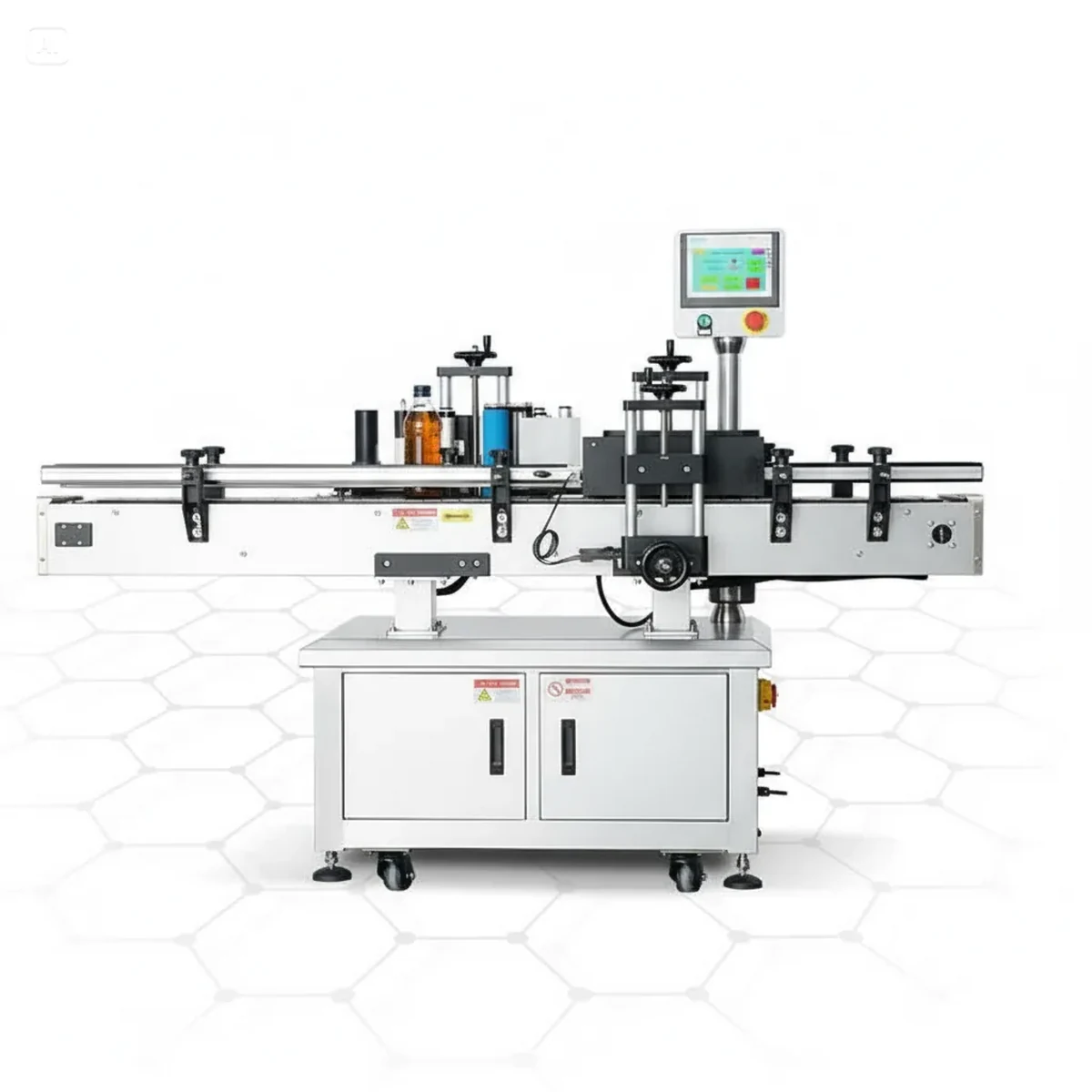
Automatic wraparound labelling machine used to illustrate safety and PUWER planning

Work-equipment planning

Start with the intended use, the complete line and the people who will operate it.

A labeller cannot be assessed in isolation from its conveyors, container handling, coding, inspection, cleaning and maintenance access. The responsible business should review the installed application and keep the resulting controls proportionate to the actual risks.

Safety topicWhat the buyer should confirmEvidence to retain
SuitabilityThe machine, format parts and controls are suitable for the intended containers, labels, output and production environment.Specification, approved samples, risk assessment and acceptance record.
Dangerous partsAccess to in-running nips, moving belts, rollers, conveyors and automatic mechanisms is prevented or controlled.Guarding review, interlock checks and safe operating instructions.
Stopping and isolationNormal stop, emergency stop and energy isolation are defined for operation, cleaning, fault clearing and maintenance.Control description, isolation procedure and test record.
Information and trainingOperators and maintainers understand normal use, foreseeable faults, prohibited actions and escalation routes.Manuals, training records and authorised-person list.
Inspection and maintenanceSafety-related components are checked at intervals determined by risk, use, environment and supplier guidance.Inspection plan, maintenance log and defect close-out record.

Buyer question

Does PUWER apply to a wraparound labelling machine?

PUWER applies to work equipment used by employees, so the business that owns, operates or controls a wraparound labelling machine must ensure that it is suitable, safe, maintained, inspected where required and used by trained people. The exact controls depend on the installed machine, line interfaces, access needs and workplace risk assessment.

The Health and Safety Executive explains that work equipment should be suitable for its intended use, maintained in a safe condition, accompanied by appropriate protective measures and used by people who have received adequate information, instruction and training. See the official HSE PUWER overview. This guide supports specification discussions; it does not replace competent, site-specific legal or safety advice.

Guarding and access

What guarding should be reviewed on a wraparound labeller?

Guarding should prevent or control access to moving parts that can trap, draw in, crush or strike a person, while still allowing the defined operating, changeover, cleaning and maintenance tasks to be completed safely. The review should include the applicator, wrap belt or rollers, product spacing devices, conveyors, drives and any automatic reject equipment.

  • Identify every routine access point and the task performed there.
  • Confirm whether fixed guarding, interlocked access or another engineered measure is appropriate.
  • Check that guards cannot be defeated as part of normal production pressure or fault clearing.
  • Include upstream and downstream equipment in the access-zone review.
  • Test guard and interlock functions during commissioning and after relevant changes.

Controls and energy

What should emergency-stop and isolation planning cover?

An emergency stop is a supplementary control, not a substitute for effective guarding or safe isolation. The project should define what stops, how the connected line responds, how stored electrical or pneumatic energy is released, and how the machine is prevented from restarting during maintenance or fault clearing.

For maintenance, the HSE advises that equipment should be made safe, power and other energy sources isolated, stored energy released and accidental reconnection prevented where necessary. See HSE guidance on maintenance of work equipment.

Inspection

How often should a labelling machine be inspected?

There is no single universal inspection interval for every labeller; the frequency should be determined by risk assessment, installation conditions, deterioration, use, environment, supplier guidance and experience in service. Equipment whose safety depends on installation should be checked after installation and before first use, and relevant equipment should be re-inspected after exceptional events or significant changes.

The HSE states that inspections should focus on safety-related parts and be carried out by someone with sufficient knowledge and experience. See HSE inspection guidance.

Handover checklist

Record the safety evidence that will still be needed after production starts.

Before first use

  • Approved machine and line specification.
  • Site-specific risk assessment and safe operating method.
  • Guard, interlock, stop and isolation checks.
  • English-language instructions and relevant conformity documentation.
  • Operator and maintenance training records.

During the machine life

  • Pre-use and planned inspection records.
  • Maintenance, defect and repair history.
  • Controlled backups of settings and recipes.
  • Review after relocation, modification or material process change.
  • Clear escalation route for faults affecting safety.

Use the installation guide, site-acceptance guide and operator-training guide to keep the machine specification, commissioning and routine use aligned.

Quick enquiry

Send us your labelling requirement.

Include container diameter, label size, material, target output and whether the label is paper, film or transparent. Lancing can recommend a suitable semi-automatic, compact or automatic configuration.

Phone: 01494 623015
Email: sales@lancinguk.com

Enquiries are sent to sales@lancinguk.com. We normally respond promptly during UK business hours.