
Accepted application
- Container and label references
- Approved settings and first-off samples
- Sensor, coder and inspection configuration
- Normal stop, restart and fault response
Installed performance
Site acceptance should confirm that the delivered labeller is correctly installed, safely integrated and able to run the agreed containers and labels in the real production environment. Commissioning connects the machine to site utilities, surrounding equipment, operating procedures, training and documented acceptance evidence.
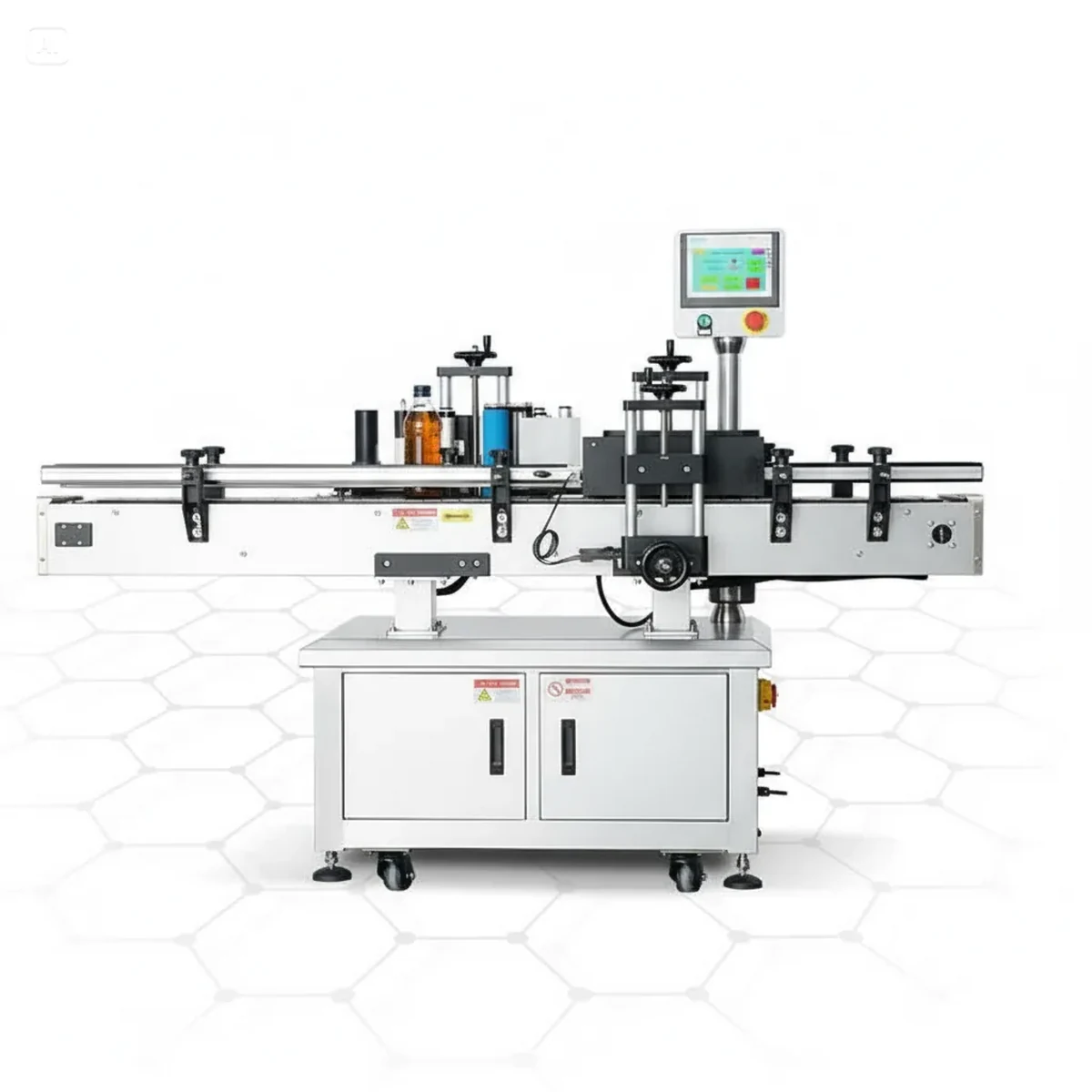
Commissioning structure
Factory testing and site acceptance answer different questions. The site stage should focus on installation conditions, live interfaces, real operating responsibilities and repeatable handover.
| Stage | What to confirm | Evidence |
|---|---|---|
| Installation | Position, level, access, utilities, conveyor transfer and safe working space. | Installation record and open-item list. |
| Safety integration | Guards, interlocks, emergency stops, isolation, line-stop ownership and site risk controls. | Site-specific checks by competent responsible persons. |
| Controls | Start, stop, ready, fault, blocked-line and upstream/downstream signal behaviour. | Interface test record. |
| Formats | Approved containers, label rolls, sensing, coding, placement and changeover. | Settings, samples and acceptance results. |
| Production run | Accepted output under documented site conditions, including stops and restarts. | Run record and quality sample set. |
| Handover | Training, manuals, maintenance, spares, responsibilities and remaining actions. | Signed handover and action tracker. |
Buyer question
A factory acceptance test verifies the agreed machine build and application evidence before dispatch. Site acceptance verifies installation, utilities, safety interfaces, surrounding line behaviour and operation in the buyer’s production environment. The site test should carry forward approved factory samples and requirements rather than starting with a new undefined standard.
Use the FAT guide to define factory evidence and the installation guide to prepare the site boundary.
Buyer question
Commissioning should start only when the machine location, access, verified utilities, production materials, responsible personnel and surrounding equipment are ready for the agreed work. Missing labels, incomplete conveyors or unavailable controls contacts can turn an acceptance visit into an installation delay rather than a valid production test.
Buyer question
Site acceptance criteria should identify the exact format, materials, operating condition, measurement method and pass requirement. A statement such as “labels correctly” is too vague. Define the container and roll revision, placement datum, seam expectation, coding check, stop/restart behaviour, run duration and how rejected or conditional packs are recorded.
Where a numerical accuracy or output target applies, link it to the supplied container and label tolerances and the agreed test conditions. Do not transfer a headline maximum from a different application into the site test.
Buyer question
If the connected line is not ready, test only what can be demonstrated honestly and record the remaining interfaces as open actions. Containers may be fed or received through an agreed temporary method, but that does not prove final line balance, accumulation, upstream spacing, blocked-discharge behaviour or production ownership of start and stop signals.
The line-integration guide and spacing and controls guide identify the interfaces that should not be silently deferred.
Buyer question
Handover should identify the supplied safeguards, residual risks, isolation method, authorised tasks, maintenance boundaries and people trained for operation or adjustment. The employer remains responsible for ensuring work equipment is suitable, maintained, inspected where required and used by adequately trained people under the actual site arrangements.
The Health and Safety Executive’s PUWER overview summarises employer duties for work equipment. Site-specific risk assessment and inspection should be completed by competent responsible persons.
Handover checklist
The final record should allow a trained operator and engineer to recover the accepted condition without relying on memory.
Quick enquiry
Include container diameter, label size, material, target output and whether the label is paper, film or transparent. Lancing can recommend a suitable semi-automatic, compact or automatic configuration.
Phone: 01494 623015
Email: sales@lancinguk.com