
→
Infeed
Confirm how containers arrive, whether they are touching, and how spacing is created. Include unstable, light or tall formats in the transfer review.
Site and line preparation
Installation planning should begin before the machine arrives. Confirm the physical route, utilities, operator access, product transfer, controls and acceptance materials as one project.
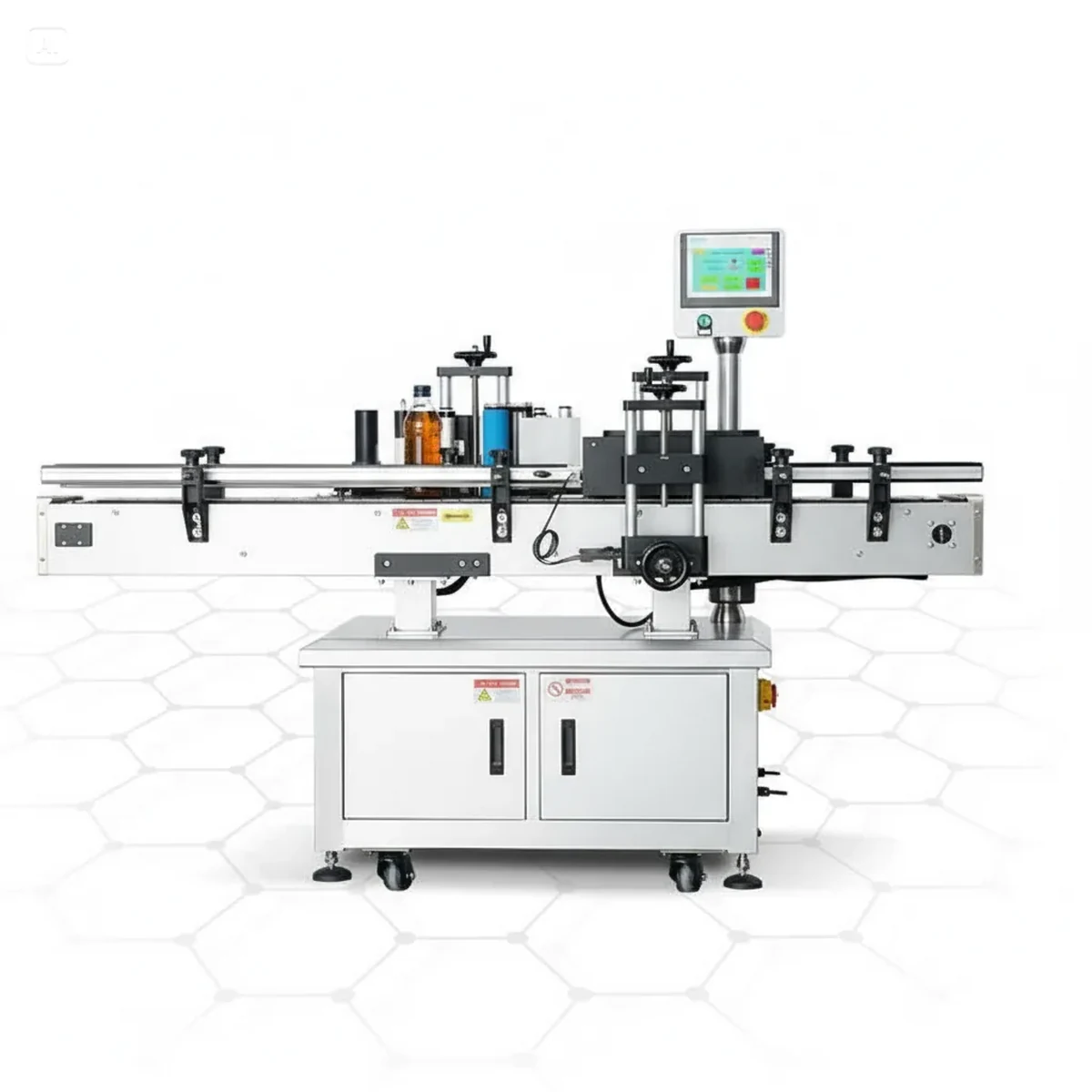
Site preparation
Allow for doors, panels, label-roll loading, cleaning, change parts, operator movement and safe maintenance access. A layout that fits the machine but blocks routine work will restrict production.
| Installation area | Information to confirm | Project effect |
|---|---|---|
| Physical access | Delivery route, doors, corners, lifting route, floor loading and final equipment position. | Determines whether the machine can reach the intended location without dismantling or unsafe handling. |
| Operating access | Operator side, label-roll changes, control panel view, cleaning and removal of rejected packs. | Affects staffing, ergonomics and changeover time. |
| Utilities | Verified supply requirements for the selected build and the site connection points. | Prevents commissioning delays and unsuitable temporary connections. |
| Conveyor interface | Direction, height, width, speed range, guide position, product pitch and transfer gap. | Controls stable transfer into and out of the labelling station. |
| Controls | Run permissive, start/stop, line-ready, fault, emergency-stop and upstream/downstream response. | Defines how the labeller behaves as part of the complete line. |
| Coding and inspection | Coder position, data source, print area, verification, reject method and reject confirmation. | Ensures traceability functions are designed into the sequence rather than added after installation. |
| Safety and guarding | Site risk assessment, interfaces, access points and responsibilities for the final installed system. | Must be confirmed by competent parties for the actual installation and use. |
Line interface
Confirm how containers arrive, whether they are touching, and how spacing is created. Include unstable, light or tall formats in the transfer review.
Provide enough controlled contact to rotate the pack without slip, rocking or contact with closures and shoulders.
Check downstream accumulation, inspection and pack handling so labelled containers are not stopped or rubbed in a way that damages a newly applied label.
The packaging line integration guide covers signal and product-flow questions in more detail. Where the machine is standalone, the same principles apply to manual loading, collection tables and operator reach.
Commissioning evidence
Any output figure should state the tested container, label, line conditions, run duration, stops and rejects. A factory trial and site test answer different questions: the first verifies the configured equipment, while the second confirms the installed line, utilities and production interfaces.
Pre-delivery review
The installation plan should identify who supplies each mechanical, electrical, controls and production-readiness item. A clear boundary prevents commissioning time being used to resolve access, conveyor, coding or material issues that could have been confirmed earlier.
| Review area | Information to confirm | Why it matters |
|---|---|---|
| Access and handling | Delivery route, doorways, floor condition, unloading method and final positioning. | The machine and any modules must reach the operating location without unsafe improvised handling. |
| Utilities and isolation | Verified machine requirements, connection points, isolators and site responsibilities. | Utilities must match the supplied equipment documentation; assumptions should not be made from a similar machine. |
| Line controls | Start, stop, permissive, fault and accumulation behaviour between connected equipment. | A labeller can only operate reliably when upstream supply and downstream acceptance are controlled. |
| Coding and inspection | Coder position, message source, trigger, reject or operator response and inspection criteria. | Printing and labelling need a shared acceptance method rather than separate visual checks. |
| Production materials | Filled containers, final label rolls, coding consumables and representative format extremes. | Commissioning with substitute materials can conceal handling or sensing limitations. |
At handover, record the installed layout, approved formats, settings ownership, operator and maintenance responsibilities, and the method for reporting unresolved observations. Keep machine manuals, risk information and site procedures available to the people who operate or maintain the equipment. When coding is included, the date coding and labelling guide helps define the message, trigger and verification boundary. Use the wraparound labelling machine buyer's guide to confirm whether the selected automation level still matches the intended line and format range.
Quick enquiry
Include container diameter, label size, material, target output and whether the label is paper, film or transparent. Lancing can recommend a suitable semi-automatic, compact or automatic configuration.
Phone: 01494 623015
Email: sales@lancinguk.com
Safe installed system
The supplier and installer provide machine information and complete their contractual duties, while the business using the equipment must assess the installed workplace application, people, access, interfaces and operating methods.
Yes. The review should cover interfaces, shared stops, access zones, stored energy and fault-clearing tasks across the complete connected system rather than treating the applicator as isolated.
Where safety depends on installation conditions, HSE guidance states that relevant work equipment should be inspected after installation and before first use, and after reassembly at a new site.
The wraparound labeller safety and PUWER guide covers suitability, guarding, stopping, isolation, inspection and training evidence.