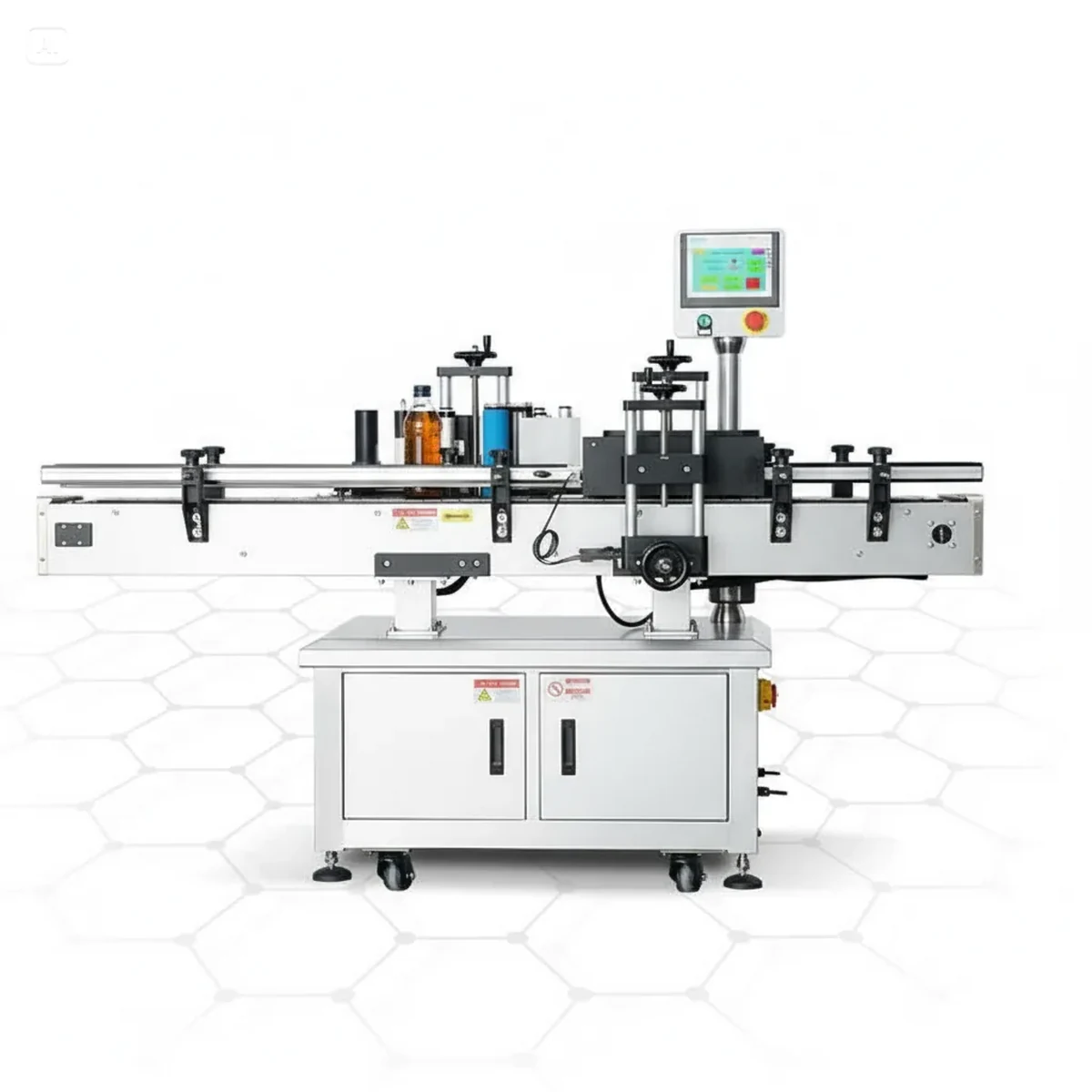
| Application principle | An adhesive label is peeled from its backing liner, presented to the container and pressed around the surface. | A printed film sleeve is placed around the container and heat is used to make the film conform to the pack. |
| Container geometry | Strongest on a stable round container with a usable cylindrical label panel; taper and changing diameter require trials. | Can follow more complex contours when the sleeve, artwork and shrink process are engineered for the actual container. |
| Line equipment | Label roll holder, web path, sensor, dispensing edge and wrap-control station. | Sleeve handling and a controlled heat-shrink process, with utilities and guarding appropriate to the installed equipment. |
| Coding and inspection | Code position, sensor contrast, label presence and placement can be assessed within the pressure-sensitive labelling sequence. | Print, sleeve position and the result after shrinking need to be assessed as part of the sleeve process. |
| Changeover evidence | Container guides, web, sensor, label position and wrap contact are format-critical. | Sleeve size, material, artwork distortion, placement and shrink conditions are format-critical. |
| Trial evidence | Production container, final label roll, liner, gap, adhesive and target placement. | Production container, final sleeve construction, artwork and representative shrinking conditions. |