
Container factors
- Diameter and roundness
- Taper across the label panel
- Rigidity, filled weight and base stability
- Raised seams, mould marks or surface texture
Process explained
A wraparound labelling machine dispenses a pressure-sensitive label from its backing liner while a round container is rotated in controlled contact with the label. The application succeeds when label feed, container rotation, sensing and product handling remain synchronised for the actual bottle, jar or can.
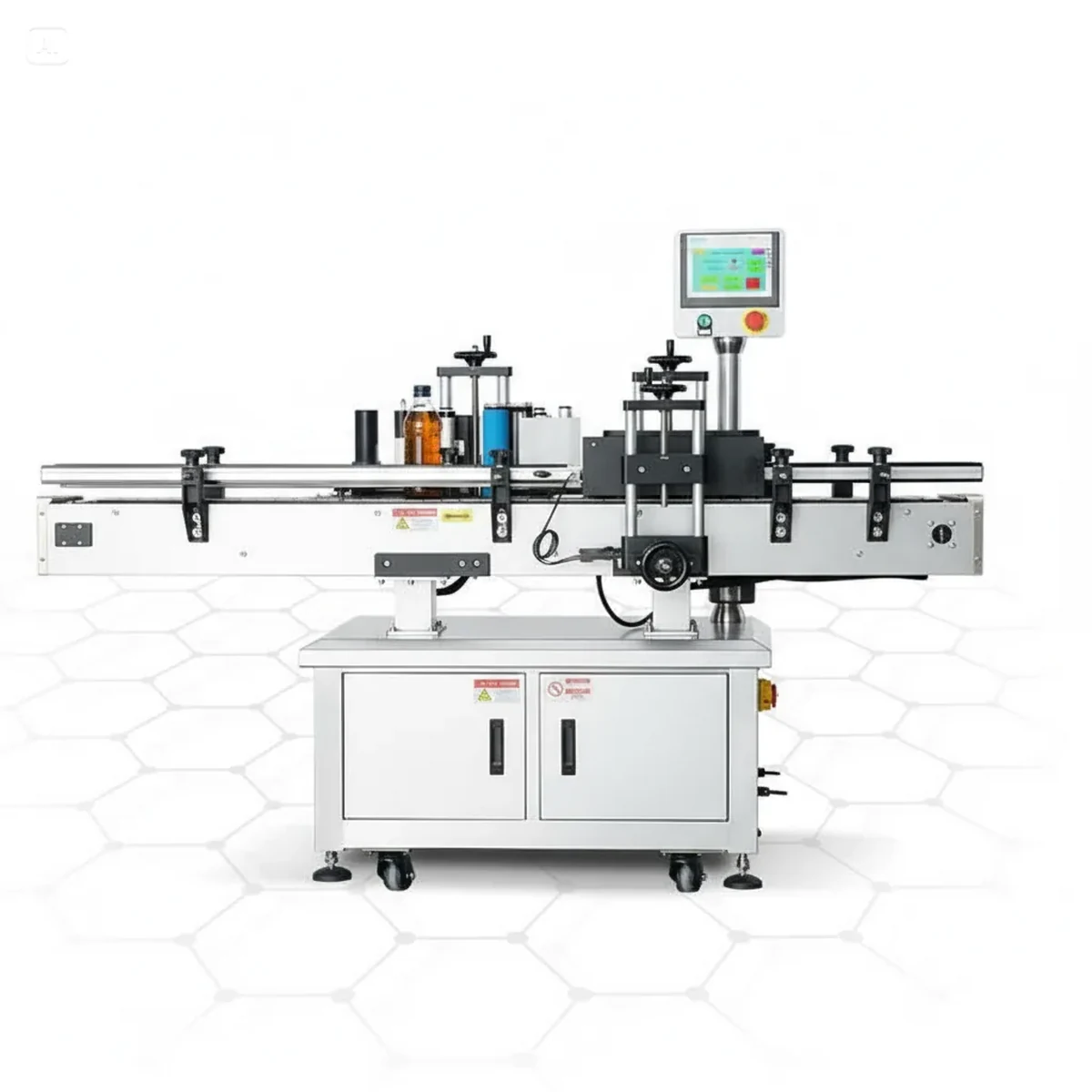
Process sequence
Bench, compact and fully automatic machines all need the same application evidence: a stable round container, a correctly presented label roll, reliable label detection and controlled rotation through the wrap zone.
| Process stage | What the machine must control | Evidence to provide |
|---|---|---|
| Product presentation | Container position, stability and repeatable contact with guides or support rollers. | Filled production containers representing the smallest, largest and least stable formats. |
| Label detection | The gap or material change between one label and the next. | A production roll with the intended face material, liner, gap and winding direction. |
| Label dispense | Peeling the label from the liner at the correct point and feed rate. | Label width, length, web width, roll core and outside diameter. |
| Container rotation | Surface speed and contact so the label wraps without slip, skew or trapped air. | Container material, diameter, taper, rigidity, seams and surface condition. |
| Release and inspection | Completing the wrap and moving the labelled pack without damaging the label. | Agreed placement, seam and appearance checks. |
Buyer question
A wraparound labelling cycle presents the round container, detects its position, dispenses one label, rotates the container against the label and takes up the spent backing liner. The labelled container is then released or conveyed onward. The exact mechanism differs by machine, but the cycle always depends on repeatable product presentation and label detection.
The automatic demonstration and semi-automatic demonstration show how the same principle is applied in two different production arrangements.
Buyer question
Controlled rotation keeps the container surface moving consistently with the dispensed label. If the pack slips, rocks, changes diameter across the label panel or loses contact with the wrap mechanism, the label can skew, wrinkle, trap air or finish with an inconsistent seam. The required control must therefore be tested with the real production container.
Use the container shape, taper and rigidity guide to identify the formats most likely to need a representative trial.
Buyer question
Bench and semi-automatic machines rely on an operator to present each container, while compact and fully automatic machines convey containers through the labelling station. Automation changes product feeding, spacing, line control and labour; it does not remove the need to match the label roll, sensor and wrap method to the actual container.
| Machine route | Container presentation | Best question to resolve |
|---|---|---|
| Bench or semi-automatic | Operator loads and removes each container. | Can the required batch be labelled repeatably with acceptable operator handling? |
| Compact automatic | Containers move through a small conveyor-based station. | Can the surrounding infeed and discharge maintain stable flow in the available space? |
| Fully automatic | Spacing, application and transfer are integrated into the line. | Can the complete line sustain accepted output through stops, restarts, roll changes and format changes? |
Compare the routes in the wraparound labeller range and the automatic versus semi-automatic guide.
Buyer question
A straight, smooth wrap can be prevented by container taper, variable roundness, unstable product handling, incorrect guide settings, label-feed timing, sensor errors, contaminated surfaces or unsuitable label construction. The correct remedy depends on the observed failure mode, so adjustments should be made one variable at a time and checked against retained samples.
Check whether the container axis, guide path and label dispense edge are square to one another.
Check taper, surface condition, label flexibility and the relationship between dispense and rotation.
Check product position, sensor stop point, label length, container circumference and slip during wrapping.
The troubleshooting guide provides a controlled sequence for separating container, label, sensor and handling causes.
Buyer question
A useful wraparound labelling specification needs production containers, production label rolls, dimensions, material details, target accepted output and the surrounding process. It should also define the required label position, seam appearance, coding, changeover range and how a successful trial will be judged. Photos alone rarely show every handling and sensing variable.
Use the specification checklist before requesting a quotation.
Quick enquiry
Include container diameter, label size, material, target output and whether the label is paper, film or transparent. Lancing can recommend a suitable semi-automatic, compact or automatic configuration.
Phone: 01494 623015
Email: sales@lancinguk.com