
Bench wraparound application
Cylindrical container rotation during labelling
The demonstration illustrates the wrap process and operator-fed format. It is not a substitute for measuring placement across a consecutive production-condition sample.
Bench labelling video
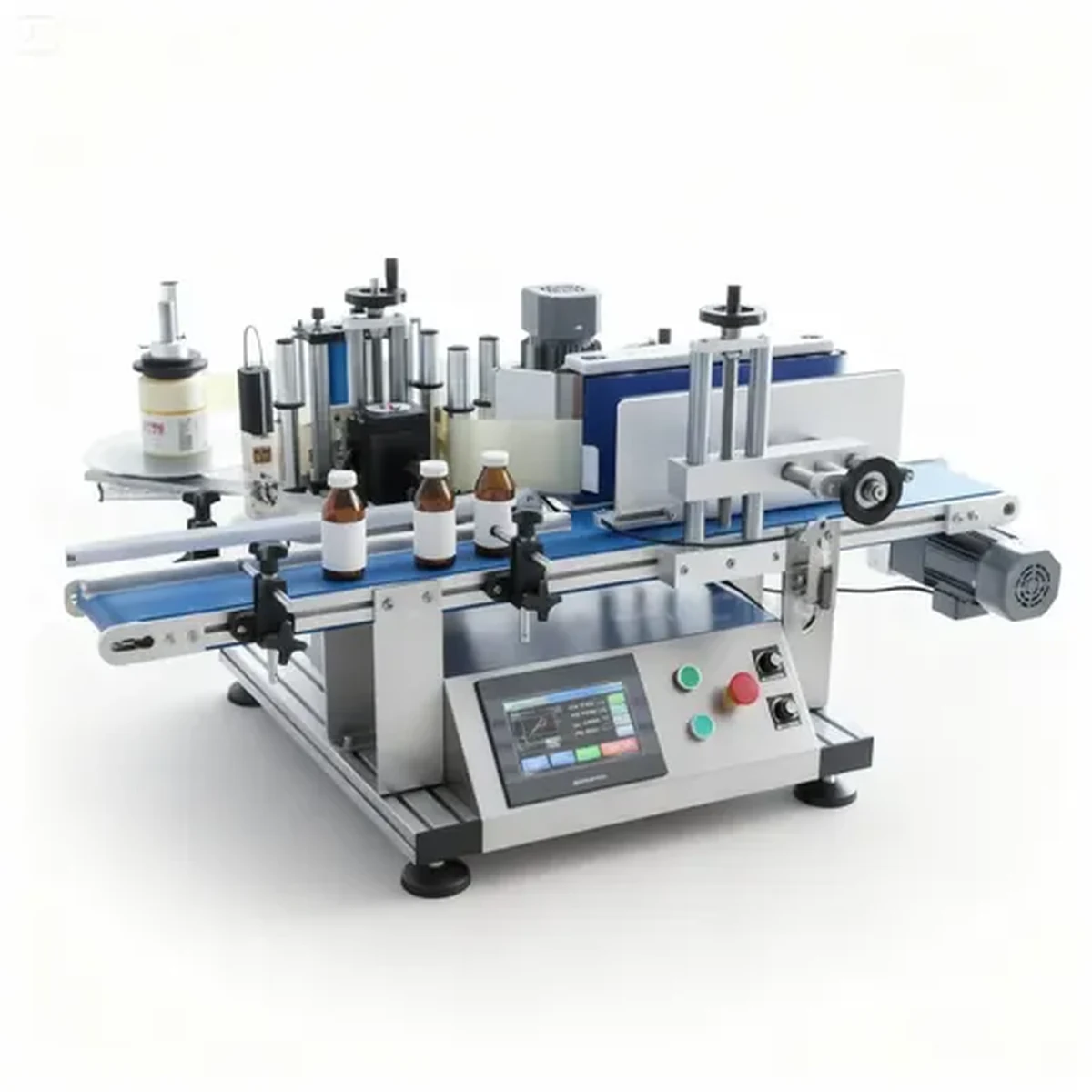
This bench demonstration shows a cylindrical container rotating during wraparound label application. It helps explain the operator-fed process but does not establish sustained output without a controlled trial.
Run video
The wide-format clip shows the container and label application area. Final suitability depends on the actual bottle, label roll, operator method and approved quality criteria.
Bench wraparound application
The demonstration illustrates the wrap process and operator-fed format. It is not a substitute for measuring placement across a consecutive production-condition sample.
Operator cycle
The operator selects the correct container and presents it consistently to the support or roller arrangement.
Container stops, guides or visual references must place each bottle at the same axial position before the cycle.
The approved control method starts rotation and label application. The operator must remain outside any prohibited access area.
The operator removes the pack, checks label and code, and separates any unit that does not meet the agreed acceptance method.
Label roll changes, coding consumables and unlabelled/labelled pack presentation affect sustained output.
Repeated skew, missed labels or poor wrap contact should be escalated and investigated rather than corrected by uncontrolled adjustment.
Trial checklist
See the LT-50D semi-automatic labeller page for the current verified reference range. Use the operator training guide to define competence and the sample-testing guide to plan a controlled run.
Workstation evidence
On a semi-automatic wraparound labeller, the machine cycle is only one part of the production method. Sustainable output also depends on how the operator receives unlabelled packs, presents each container, removes the labelled pack and completes the required inspection.
A semi-automatic machine can be appropriate where batch size, format variety or available space favours operator loading. Where the required result depends on continuous infeed, automatic spacing or connection to upstream and downstream equipment, review the automatic versus semi-automatic guide and the compact automatic labeller. The final choice should be based on accepted packs under the buyer's stated working method.
Quick enquiry
Include container diameter, label size, material, target output and whether the label is paper, film or transparent. Lancing can recommend a suitable semi-automatic, compact or automatic configuration.
Phone: 01494 623015
Email: sales@lancinguk.com