
Inspection evidence
- Accepted and failed labelled samples
- Required measurements or readable code data
- Container and label material variation
- Line speed, spacing and lighting conditions
Quality control
A label inspection and reject system should be specified around the exact defect that matters: missing label, incorrect position, unreadable code, wrong orientation or another defined condition. The inspection method, decision timing, reject device, confirmation and response to a failed reject must work as one controlled line function.
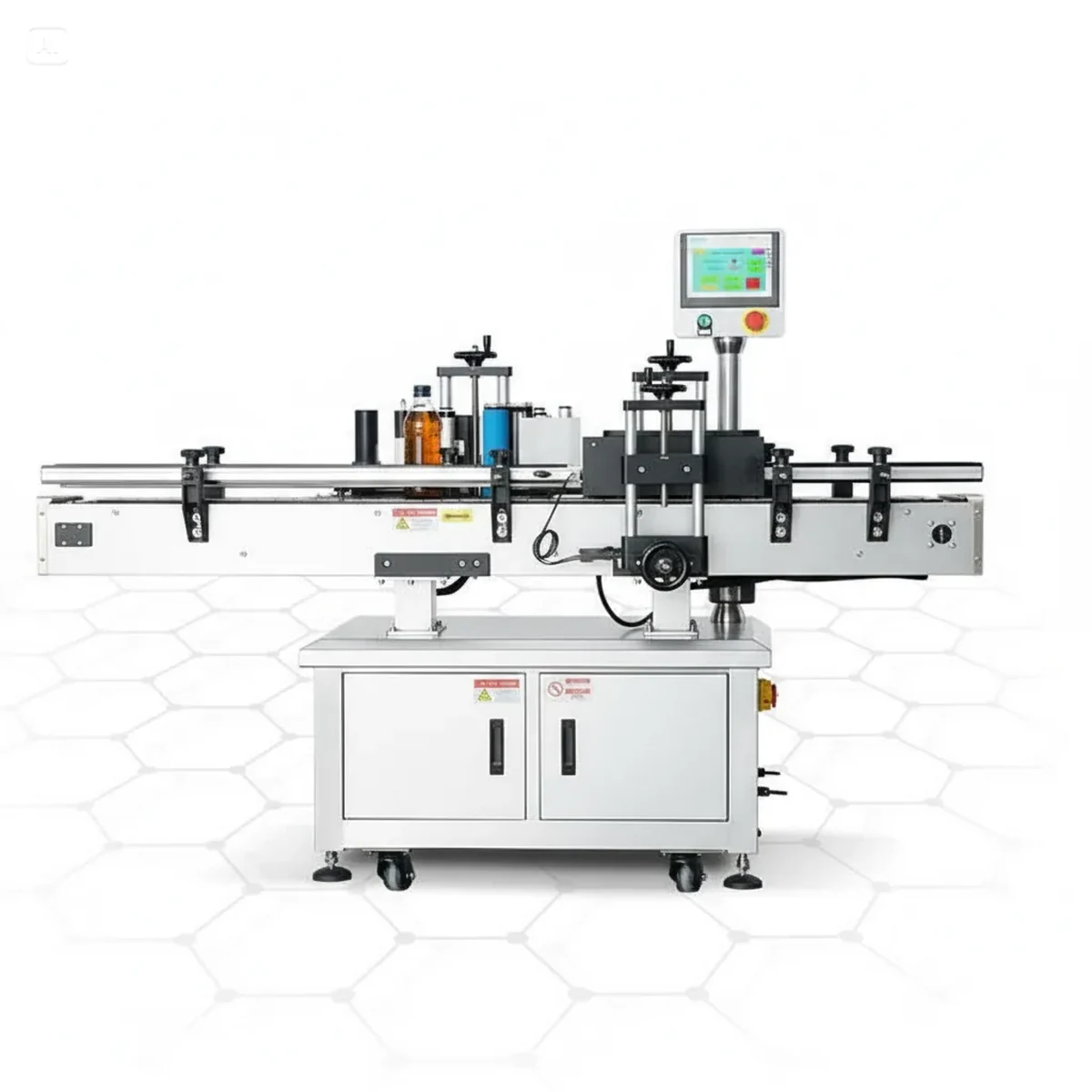
Inspection scope
A simple presence sensor and a camera inspection system answer different questions. The required level should follow the product risk, label presentation and acceptance criteria.
| Inspection task | Question to define | Evidence needed |
|---|---|---|
| Label presence | Is a label present in the expected area? | Good and deliberately missing-label samples. |
| Placement | Is the label within the agreed height, skew, seam or angular limits? | Measured accepted and rejected samples. |
| Code verification | Is the required date, lot or machine-readable code present and readable? | Approved code format, contrast and failure samples. |
| Product identity | Does the label or code match the expected product or recipe? | Controlled data source and mismatch response. |
| Reject handling | Can the failed pack be removed and its removal confirmed? | Reject timing, confirmation and failed-reject test. |
Buyer question
Inspection can be designed to check label presence, approximate or measured placement, seam position, orientation and printed information, depending on the equipment and the visible features. The defect definition must be objective enough to distinguish an acceptable pack from a reject under normal container and label variation.
Transparent labels, reflective containers and curved surfaces can make inspection more demanding. Production samples should be assessed under representative lighting and line conditions.
Buyer question
A sensor may be sufficient for a simple binary check such as label presence or product passage when the feature is consistent and detectable. A vision system is more appropriate when the project must evaluate position, artwork, orientation, text or code quality. The choice should follow the defect, not the desire to add complexity.
Provide accepted and deliberately failed samples so the inspection boundary can be demonstrated rather than assumed.
Buyer question
The controls must associate an inspection result with the same physical container as it travels to the reject point. That can depend on controlled spacing, conveyor movement and a tracking method. If containers slip, queue or change order, the reject logic must still identify the failed pack or stop the line safely.
The spacing and line-control guide explains why stable pitch and blocked-line behaviour matter.
Buyer question
The required response should be agreed from the application risk and site quality system. Options may include a confirmed reject, line stop, alarm or controlled hold condition. A reject command without confirmation can allow a failed pack to continue if the mechanism is blocked, the bin is full or the container does not leave the conveyor.
Test the reject with real containers and include deliberate failure conditions during acceptance.
Buyer question
Coding and verification can change container spacing, trigger timing, inspection exposure and reject tracking, so accepted output should be measured with the complete coding and inspection sequence active. A labeller-only speed does not prove the rate of the final controlled line.
Use the date coding guide and output guide to define comparable conditions.
Quotation checklist
A useful inspection quotation needs more than the phrase “camera check”.
Quick enquiry
Include container diameter, label size, material, target output and whether the label is paper, film or transparent. Lancing can recommend a suitable semi-automatic, compact or automatic configuration.
Phone: 01494 623015
Email: sales@lancinguk.com