
✓
Code position
Decide whether the code appears on the label, bottle, cap or carton.
Coding integration
Many packaging lines need date, batch or lot codes as well as labels. This guide explains how coding should be considered when specifying a bottle labelling machine.
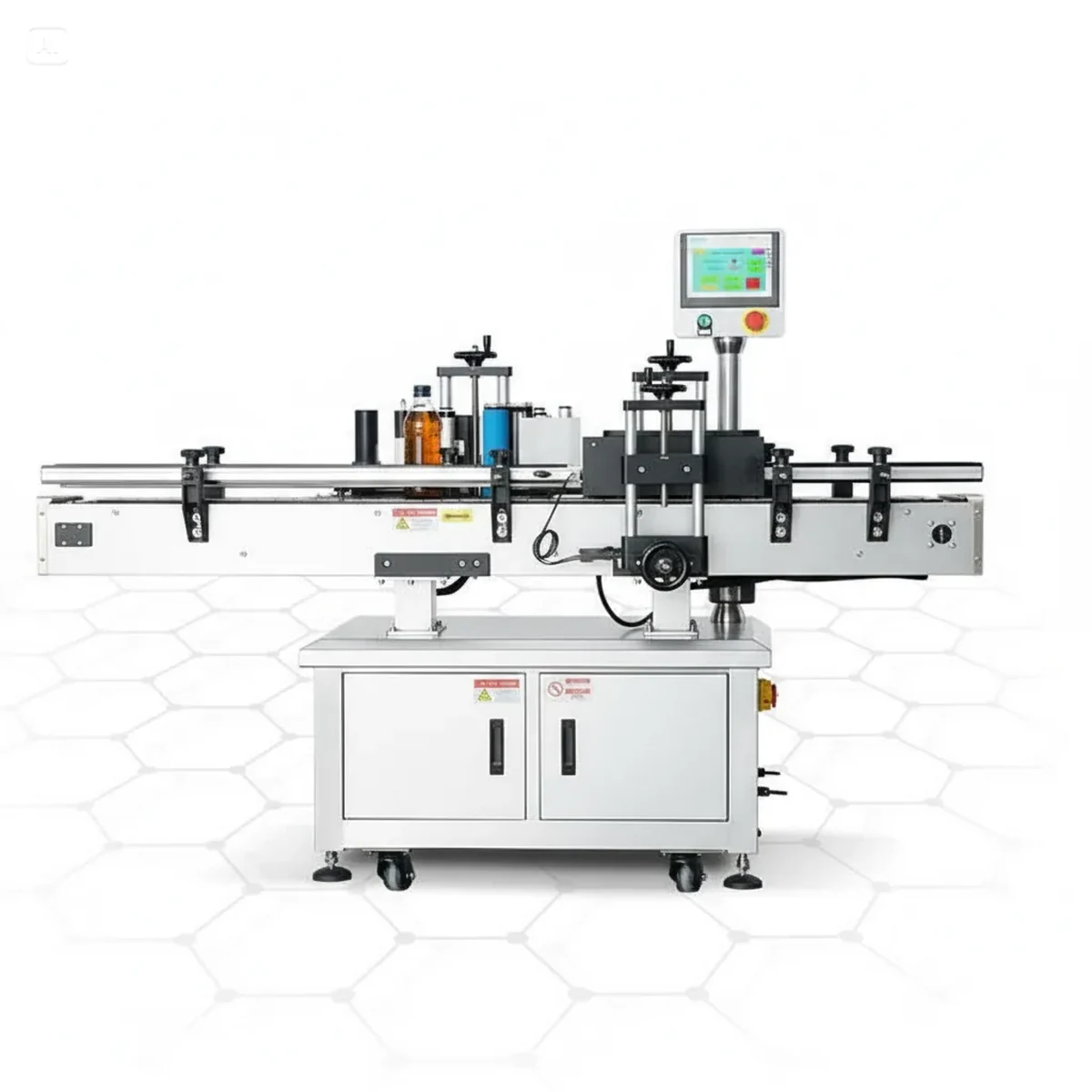
Integration guide
Date coding can happen on the label, bottle, cap or secondary packaging. The position affects machine layout, sensor triggering and space around the labeller. Planning coding and labelling together avoids awkward retrofit work later.
Decide whether the code appears on the label, bottle, cap or carton.
The coder needs a reliable product signal and stable product movement.
Leave room for printer maintenance, ink or ribbon changes and inspection.
Practical comparison
| Coding location | Consideration | Line impact |
|---|---|---|
| On label | Label must pass consistently at print head | May be before or during application |
| On bottle | Surface shape and stability matter | Needs space before or after labeller |
| On cap | Cap orientation and height matter | May need separate handling |
| On carton | Later in packing line | Separate coding station possible |
Specification advice
Review the actual container shape, diameter, label panel and surface finish. A label applicator works best when the pack is stable and the label area is predictable.
Confirm label material, roll direction, label gap and adhesive before ordering production labels. Clear, film or metallic labels may need extra testing.
Decide whether the operation is batch-fed, compact automatic or part of a conveyorised filling and capping line. The best machine is the one that fits the full process.
Related guidance
Use these guides to compare machine routes, confirm the label and container specification, and prepare the evidence needed for a useful quotation.
Browse selection, setup, sensing, output, integration and troubleshooting guidance for round-container labelling projects.
Compare bench, compact and automatic routes using container, label, output, changeover and integration requirements.
Collect container dimensions, label-roll data, output, coding and site details before requesting a machine quotation.
Check unwind direction, leading edge and roll presentation before ordering production labels or arranging a trial.
Measure the usable cylindrical panel and estimate label length, seam gap or overlap for a representative sample.
Separate headline cycle rate from sustainable accepted output by allowing for handling, coding, stops and changeovers.
Work through container, roll, sensor, guide and wrap settings when labels skew, wrinkle, bubble or fail to dispense.
Browse selection, setup, sensing, output, integration and troubleshooting guidance for round-container labelling projects.
Review conveyorised wraparound labelling for higher-output round-container lines and upstream or downstream integration.
Review a smaller automatic route for growing production where repeatability is needed without a full-size inline system.
Review operator-fed wraparound labelling for shorter batches, frequent changeovers and limited production space.
Compare bench, semi-automatic, compact and fully automatic wraparound labellers in one range overview.
Questions
Often yes, but the best position should be planned with the labelling process.
It depends on where the code needs to appear and how the product is handled.
Code position, code size, substrate, speed and whether the line already has a coder are useful details.
Technical review
This guide is maintained by Lancing's packaging machinery team. Lancing states that it has specialised in semi-automatic and fully automatic machinery for over 40 years and supports equipment across the UK, Europe and worldwide. Final recommendations are confirmed against actual containers, labels and production targets.
Last technical review: 11 July 2026 · About Lancing · Official company profile
Quick enquiry
Include container diameter, label size, material, target output and whether the label is paper, film or transparent. Lancing can recommend a suitable semi-automatic, compact or automatic configuration.
Phone: 01494 623015
Email: sales@lancinguk.com
Coding compatibility
Date, batch and lot coding should be treated as part of the labelling cycle rather than an accessory added after the output target is agreed.
Start with the required data and the surface that will receive it. If the code is printed onto the label web before application, the coder needs a stable print area, compatible label material and enough web movement or dwell. If the code is applied after the label is on the container, the pack must be presented with a stable distance and orientation. In either case, the print position must avoid artwork, varnish, seams or strongly curved areas that reduce legibility.
Define character content, maximum line count, character size, print field and whether data changes by batch, date or individual container.
Provide the production label so print adhesion and contrast can be assessed. Confirm whether the web stops, moves continuously or needs a separate coding station.
Decide whether an operator check is sufficient or a reader or vision system is required. Define what happens after a missing or unreadable code is detected.
Include coding in the timed trial because print time, communication and inspection can reduce sustainable line output. Record the exact coder configuration and test code quality across a consecutive run. The automatic and compact wraparound references support coding options, while the LT-50D route has an integrated date-printer option.
Applications that print and apply variable logistics labels to cartons, cases or pallets are outside this site’s round-bottle ownership. Review the wider Lancing print-and-apply route instead of creating a competing round-container page.