
1
Machine boundary
Confirm whether the quotation includes only the applicator or also conveyors, infeed, outfeed, coding, inspection, reject handling and guarding.
Prepare a comparable quotation
A useful quotation defines the container, label, output, automation, controls and project scope. Price cannot be compared accurately when suppliers are quoting different handling, sensing or integration assumptions.
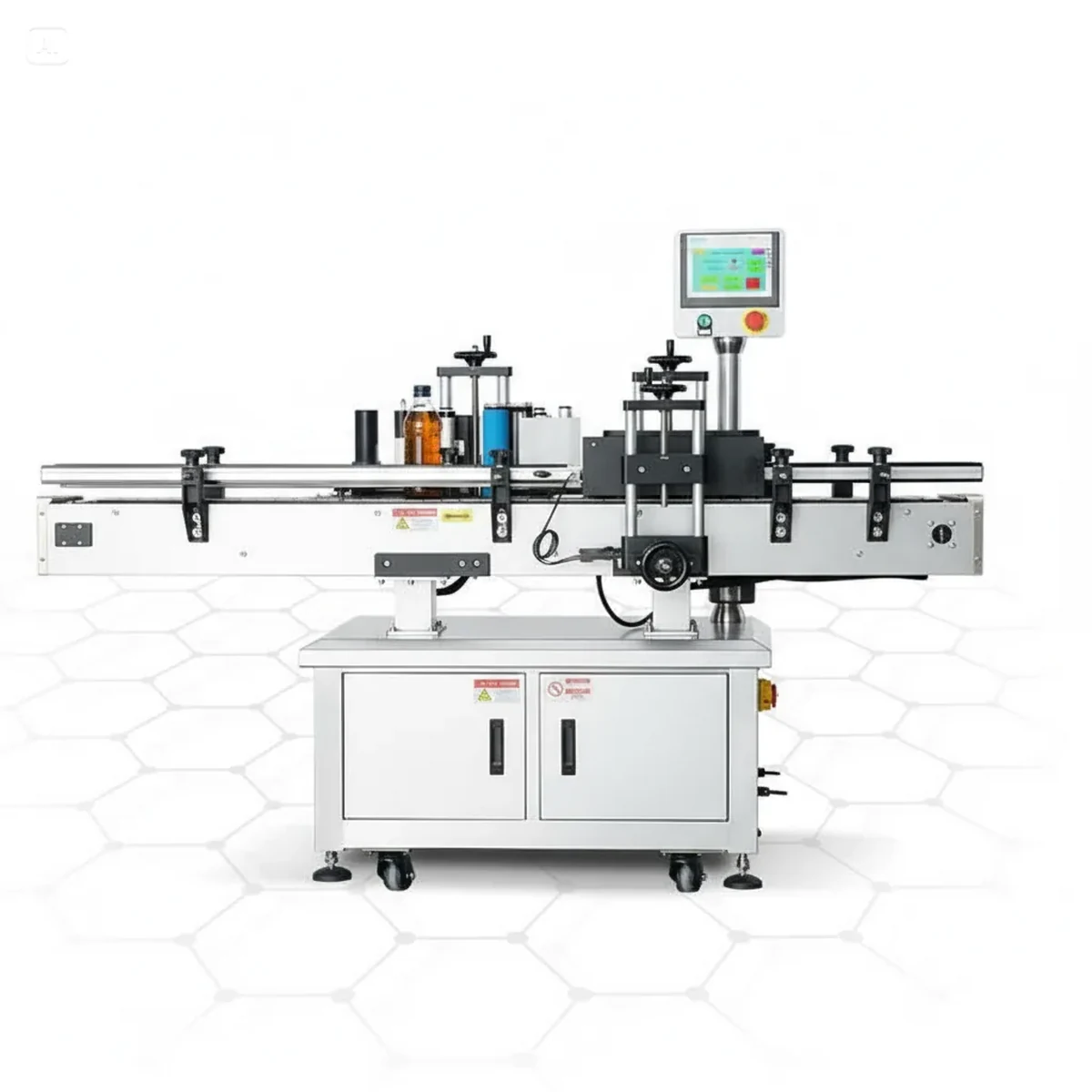
Quotation scope
No single price applies to every round bottle labeller. The same basic label application can require different container control, sensing, coding, inspection, guarding and line interfaces.
| Cost factor | What changes the scope | Information to provide |
|---|---|---|
| Automation level | Operator-fed bench operation, compact conveyorised operation or fully integrated automatic line. | Normal output, peak output, batch size, operators and future growth. |
| Container range | Diameter and height extremes, taper, flexibility, stability, filled weight and product features. | Dimensioned samples and the most difficult production formats. |
| Label roll and sensor | Web width, core, roll diameter, winding direction, paper, film, clear or low-contrast construction. | Production-condition label rolls and supplier specification. |
| Placement requirement | General wrap placement, seam zone, orientation to a container feature or project-specific measurement. | Approved artwork, physical samples and acceptance method. |
| Coding and verification | Date or batch coder, print position, data source, camera or code check and reject response. | Code content, print area, data flow and fault-handling requirement. |
| Line integration | Conveyor transfer, spacing, accumulation, control signals, guarding and surrounding equipment. | Layout, direction, heights, speeds and controls description. |
| Project services | Sample testing, documentation, installation, commissioning, training and agreed acceptance evidence. | Site location, responsibilities, documentation expectations and available production materials. |
Comparable quotations
Confirm whether the quotation includes only the applicator or also conveyors, infeed, outfeed, coding, inspection, reject handling and guarding.
Identify which containers and label constructions have been reviewed or trialled and which remain subject to final samples.
Require the conditions behind any rate: container, label, coding, loading method, run duration, stops and accepted output.
Check included change parts, format range, recipes or recorded settings and the operator work required between products.
Clarify utilities, access, line modifications, handling, permits and who is responsible for the final integrated risk assessment.
Agree the samples, measurement method, coding checks and run conditions that demonstrate the quoted scope.
Quotation checklist
Use the machine specification checklist to assemble the data and the sample-testing guide to define any remaining technical conditions.
Comparable quotations
Two quotations can appear to describe a bottle labeller while including very different equipment, controls, trials, documentation and site responsibilities. A useful comparison starts with the same containers, labels, output basis and project boundary.
A lower initial figure is not necessarily a lower installed cost if essential handling, sensing, coding or site work has been omitted. The automatic versus semi-automatic comparison helps define the labour and handling boundary, while the installation guide identifies site items that should be assigned before order. Lancing can prepare a more specific proposal when the enquiry includes the production-condition samples and decisions listed in this guide.
Quick enquiry
Include container diameter, label size, material, target output and whether the label is paper, film or transparent. Lancing can recommend a suitable semi-automatic, compact or automatic configuration.
Phone: 01494 623015
Email: sales@lancinguk.com