
Normal run checks
- Stable infeed and discharge
- Repeatable label detection
- Accepted placement and wrap quality
- Readable coding where included
- Recorded accepted output
Testing and sign-off
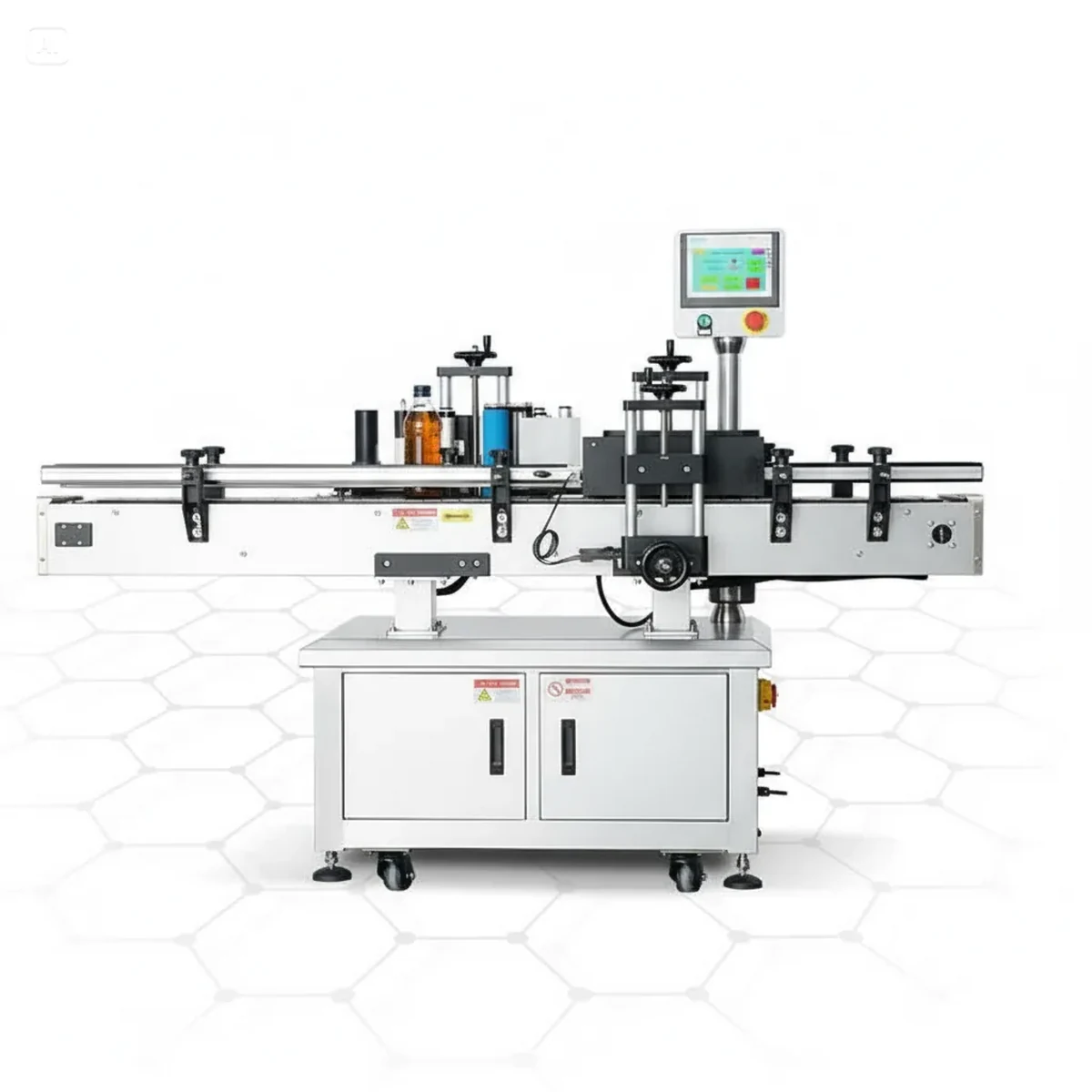
A factory acceptance test, or FAT, should verify the agreed machine configuration against representative containers, production-equivalent label rolls and documented acceptance criteria. It should test repeatable operation, label placement, wrap quality, sensing, coding, changeover and normal stop/restart behaviour under stated conditions.
Acceptance structure
A useful FAT confirms the approved build and records how it performs with the buyer’s evidence. Site acceptance can then focus on installation, utilities and live line interfaces rather than repeating an undefined factory demonstration.
| Test group | What to examine | Record |
|---|---|---|
| Configuration | Machine modules, sensor, label path, coding and agreed options. | Build check against the order or approved specification. |
| Format setup | Guide positions, label-roll loading, sensor setup and saved settings where applicable. | Format reference, settings and operator steps. |
| Application quality | Height, skew, seam, overlap or gap, wrinkles, bubbles and edge lift. | Measured samples and agreed visual standard. |
| Performance | Accepted output under defined container, label and coding conditions. | Run time, produced quantity, stops, rejects and causes. |
| Control response | Start, stop, restart, roll end, missing product, sensor and connected-equipment response. | Expected and observed behaviour. |
| Handover evidence | Manuals, training scope, open actions and retained samples. | Signed record with owners and completion dates. |
Buyer question
A wraparound labelling machine FAT is intended to prove that the agreed factory-built configuration can perform the defined labelling tasks using representative evidence. It should confirm build, operation and acceptance criteria before shipment. It does not replace the site assessment of final utilities, upstream and downstream interfaces or the installed production environment.
Start with the order, approved specification or URS and identify which requirements can be verified at the factory. A demonstration that is not linked to agreed requirements may look satisfactory but leave important formats, controls or quality criteria untested. Record any requirement that must be deferred to site acceptance and state why.
The URS guide explains how to create traceable requirements before the test protocol is written.
Buyer question
A meaningful FAT needs identified containers and label rolls that represent production conditions, including the smallest, largest and most difficult approved formats. Containers should reflect the weight and rigidity expected in use, while labels should match the intended face material, liner, gap, roll construction and winding direction. Coding consumables and approved messages should also be available when coding is included.
Agree the material quantity before the test rather than assuming a small sample can support setup and a sustained run.
Buyer question
Label placement and wrap quality should be measured against an agreed reference method using identified sample points. Typical checks include label height, skew, seam position, overlap or gap, wrinkles, trapped air and edge lift. The test record should distinguish measured criteria from visual observations and retain representative passed and failed samples where practical.
Measure from stable container features rather than from an irregular base or shoulder. Rotate the container through the full seam area and inspect the start, middle and finish of the wrap. If clear labels are included, use viewing and lighting conditions that reveal missed edges, bubbles and variable seams without pretending that one photograph captures every defect.
Use the placement quality guide to define the inspection sheet.
Buyer question
Speed should be tested as accepted labelled output under stated conditions, not only as a displayed setpoint. The run should record produced quantity, accepted quantity, stops, restarts, roll changes, missed or double labels, coding results and fault causes. Stop/restart checks should confirm that partially processed or queued containers are handled predictably.
The accepted output guide explains why the test conditions must travel with the result.
Buyer question
Before FAT sign-off, record the tested machine configuration, software or recipe reference where applicable, sample identities, label-roll details, settings, run conditions, results, deviations, photographs or video references, retained samples and open actions. Sign-off should state what passed, what remains conditional and what must be verified after installation.
Each open action should have an owner, agreed evidence and completion route. Avoid closing an item with vague wording such as “to be checked later”. If the machine is shipped with a temporary label roll, substitute container or incomplete interface, state the limitation clearly so the site team knows what still needs confirmation.
Continue with the installation guide and operator training guide for site readiness and handover.
Quick enquiry
Include container diameter, label size, material, target output and whether the label is paper, film or transparent. Lancing can recommend a suitable semi-automatic, compact or automatic configuration.
Phone: 01494 623015
Email: sales@lancinguk.com
FAT to site questions
The factory test should leave a clear record of what was proven and what remains dependent on the installed line.
Carry the approved container and label references, settings, placement samples, changeover record, coding result and open-action list. Site testing should use the same evidence unless a controlled change has been agreed.
Final site utilities, actual upstream and downstream line behaviour, local safety integration, operator practices and production environment may remain conditional until installation. Record those items explicitly rather than implying that a factory run proved the entire line.
Repeat critical functions needed to confirm transport, installation and live integration, but avoid an undefined rerun. The site plan should focus on requirements that could change because of installation or connected equipment.
Each action should have an owner, due date, evidence requirement and status at delivery. An unresolved action that affects safety or core acceptance should not be lost inside a general commissioning list.