
✓
Conveyor direction
Confirm whether containers travel left-to-right or right-to-left through the line.
Line layout
Automatic labellers need to fit both the container and the production line. Conveyor height, infeed direction, guarding, coding and outfeed space all affect the final specification.
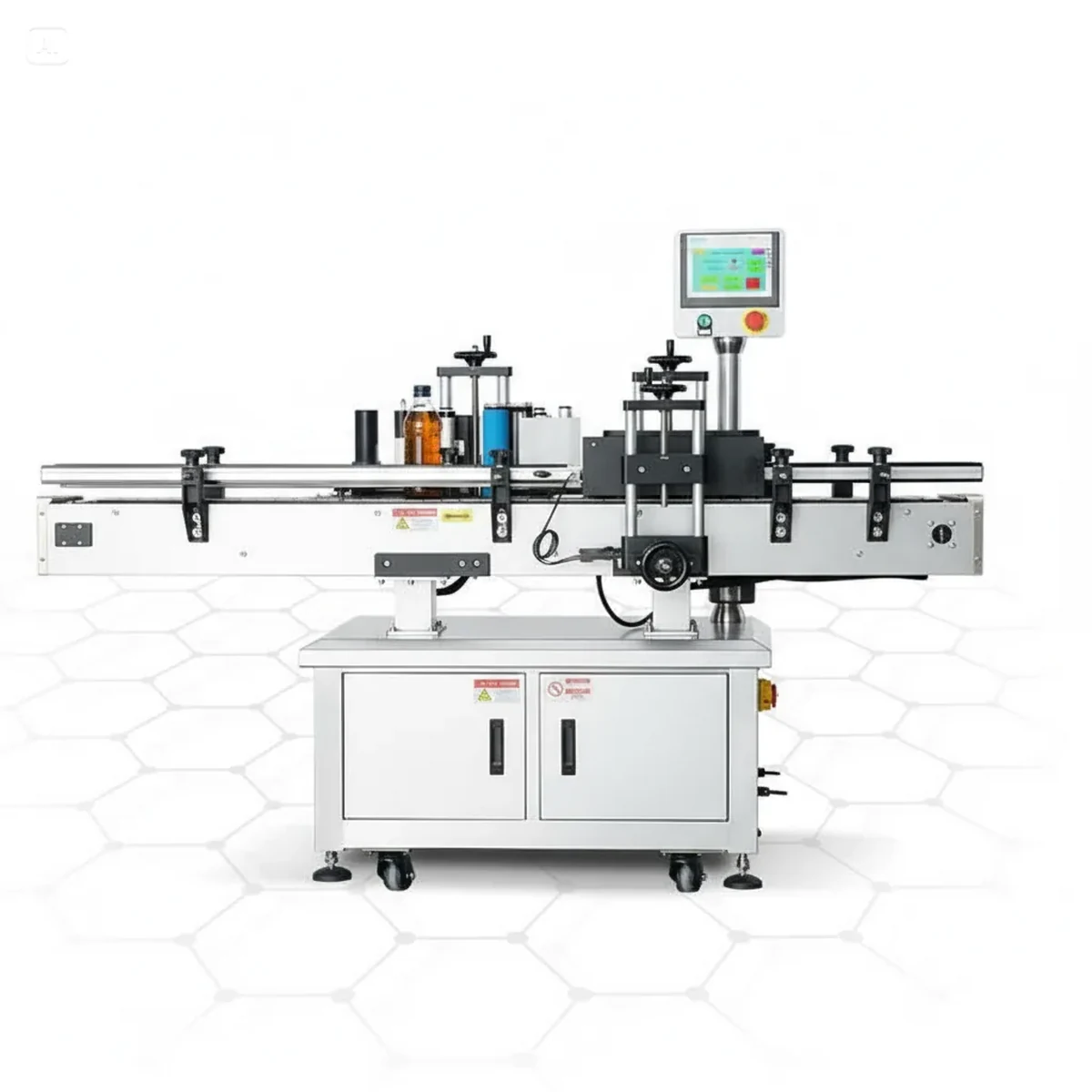
Line layout guide
A wraparound labeller can be supplied as a standalone automatic machine or integrated into a wider filling and packaging line. Early layout review reduces installation delays and helps ensure the labeller works with the filler, capper, coder and packing area.
Confirm whether containers travel left-to-right or right-to-left through the line.
Measure existing conveyor height if integrating with other equipment.
Allow room for label roll changes, operators, guarding and maintenance.
Practical comparison
| Layout point | Check | Impact |
|---|---|---|
| Infeed | Bottle spacing and stability | Affects labelling accuracy |
| Outfeed | Accumulation and packing space | Prevents back pressure |
| Coder | Print position and trigger location | Needs sensor coordination |
| Conveyor height | Existing line datum | Affects integration work |
| Power and air | Available services | May affect installation |
Specification advice
Review the actual container shape, diameter, label panel and surface finish. A label applicator works best when the pack is stable and the label area is predictable.
Confirm label material, roll direction, label gap and adhesive before ordering production labels. Clear, film or metallic labels may need extra testing.
Decide whether the operation is batch-fed, compact automatic or part of a conveyorised filling and capping line. The best machine is the one that fits the full process.
Related searches
These internal links help users and search engines understand the related machine types, applications and specification topics.
Read more about knowledge centre and compare it with the wider Lancing wraparound labelling range.
Read more about wraparound labelling machine buyer guide and compare it with the wider Lancing wraparound labelling range.
Read more about specification checklist and compare it with the wider Lancing wraparound labelling range.
Read more about label roll direction guide and compare it with the wider Lancing wraparound labelling range.
Read more about diameter and label length guide and compare it with the wider Lancing wraparound labelling range.
Read more about output speed guide and compare it with the wider Lancing wraparound labelling range.
Read more about troubleshooting guide and compare it with the wider Lancing wraparound labelling range.
Read more about label applicator faq and compare it with the wider Lancing wraparound labelling range.
Read more about automatic wraparound labeller and compare it with the wider Lancing wraparound labelling range.
Read more about compact wrap-around labeller and compare it with the wider Lancing wraparound labelling range.
Read more about semi-automatic wrap-around labeller and compare it with the wider Lancing wraparound labelling range.
Read more about all wraparound labellers and compare it with the wider Lancing wraparound labelling range.
Questions
Often yes, but the layout, conveyor height, direction and control requirements should be checked early.
An operator is still needed for label roll changes, monitoring and product changeover.
Send photos of the existing line from infeed, side and outfeed angles, plus conveyor dimensions.
Quick enquiry
Include container diameter, label size, material, target output and whether the label is paper, film or transparent. Lancing can recommend a suitable semi-automatic, compact or automatic configuration.
Phone: 01494 623015
Email: sales@lancinguk.com