
✓
Container shape
Use the straightest possible label panel and check for taper or ovality.
Label quality
Wrinkled or skewed labels reduce pack quality and can slow production. The solution is usually a combination of better container control, correct label dimensions, suitable material and accurate machine setup.
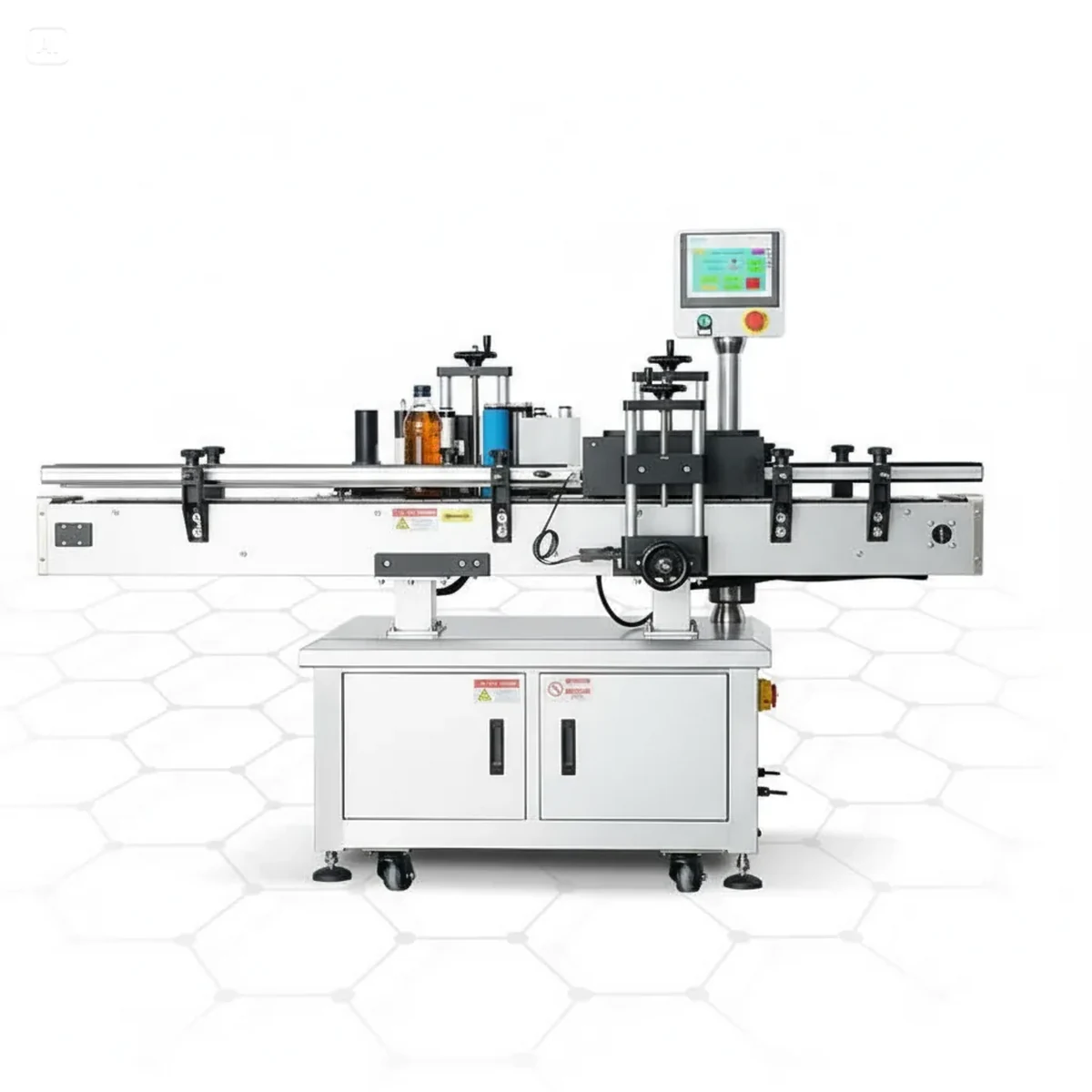
Quality guide
Wraparound labels need a consistent path around the container. Any taper, ovality, surface step, seam, moisture or guide pressure change can affect the result. This page explains the checks that help reduce visible defects.
Use the straightest possible label panel and check for taper or ovality.
Avoid unnecessary overlap and confirm label dimensions against circumference.
Check guides, pressure rollers, sensor timing and product spacing.
Practical comparison
| Cause | What it looks like | Possible correction |
|---|---|---|
| Tapered container | Label rises or falls around the bottle | Review label panel and machine suitability |
| Excessive pressure | Creases or stretched film | Reduce wipe-down pressure where appropriate |
| Long label | Heavy overlap or end lifting | Review label length and adhesive |
| Poor guiding | Variable start position | Adjust side guides and spacing |
| Dirty surface | Edges lift or label bubbles | Improve container cleaning and handling |
Specification advice
Review the actual container shape, diameter, label panel and surface finish. A label applicator works best when the pack is stable and the label area is predictable.
Confirm label material, roll direction, label gap and adhesive before ordering production labels. Clear, film or metallic labels may need extra testing.
Decide whether the operation is batch-fed, compact automatic or part of a conveyorised filling and capping line. The best machine is the one that fits the full process.
Related searches
These internal links help users and search engines understand the related machine types, applications and specification topics.
Read more about knowledge centre and compare it with the wider Lancing wraparound labelling range.
Read more about wraparound labelling machine buyer guide and compare it with the wider Lancing wraparound labelling range.
Read more about specification checklist and compare it with the wider Lancing wraparound labelling range.
Read more about label roll direction guide and compare it with the wider Lancing wraparound labelling range.
Read more about diameter and label length guide and compare it with the wider Lancing wraparound labelling range.
Read more about output speed guide and compare it with the wider Lancing wraparound labelling range.
Read more about troubleshooting guide and compare it with the wider Lancing wraparound labelling range.
Read more about label applicator faq and compare it with the wider Lancing wraparound labelling range.
Read more about automatic wraparound labeller and compare it with the wider Lancing wraparound labelling range.
Read more about compact wrap-around labeller and compare it with the wider Lancing wraparound labelling range.
Read more about semi-automatic wrap-around labeller and compare it with the wider Lancing wraparound labelling range.
Read more about all wraparound labellers and compare it with the wider Lancing wraparound labelling range.
Questions
No. Some wrinkles are caused by container shape or label material, so packaging design may need review.
Film labels can stretch or show bubbles more clearly, so material and pressure need careful setup.
Yes. Dust, moisture or product residue can reduce adhesion and cause visible defects.
Quick enquiry
Include container diameter, label size, material, target output and whether the label is paper, film or transparent. Lancing can recommend a suitable semi-automatic, compact or automatic configuration.
Phone: 01494 623015
Email: sales@lancinguk.com