
✓
Self-adhesive
Flexible, clean and suited to a wide range of products and label materials.
Label technology
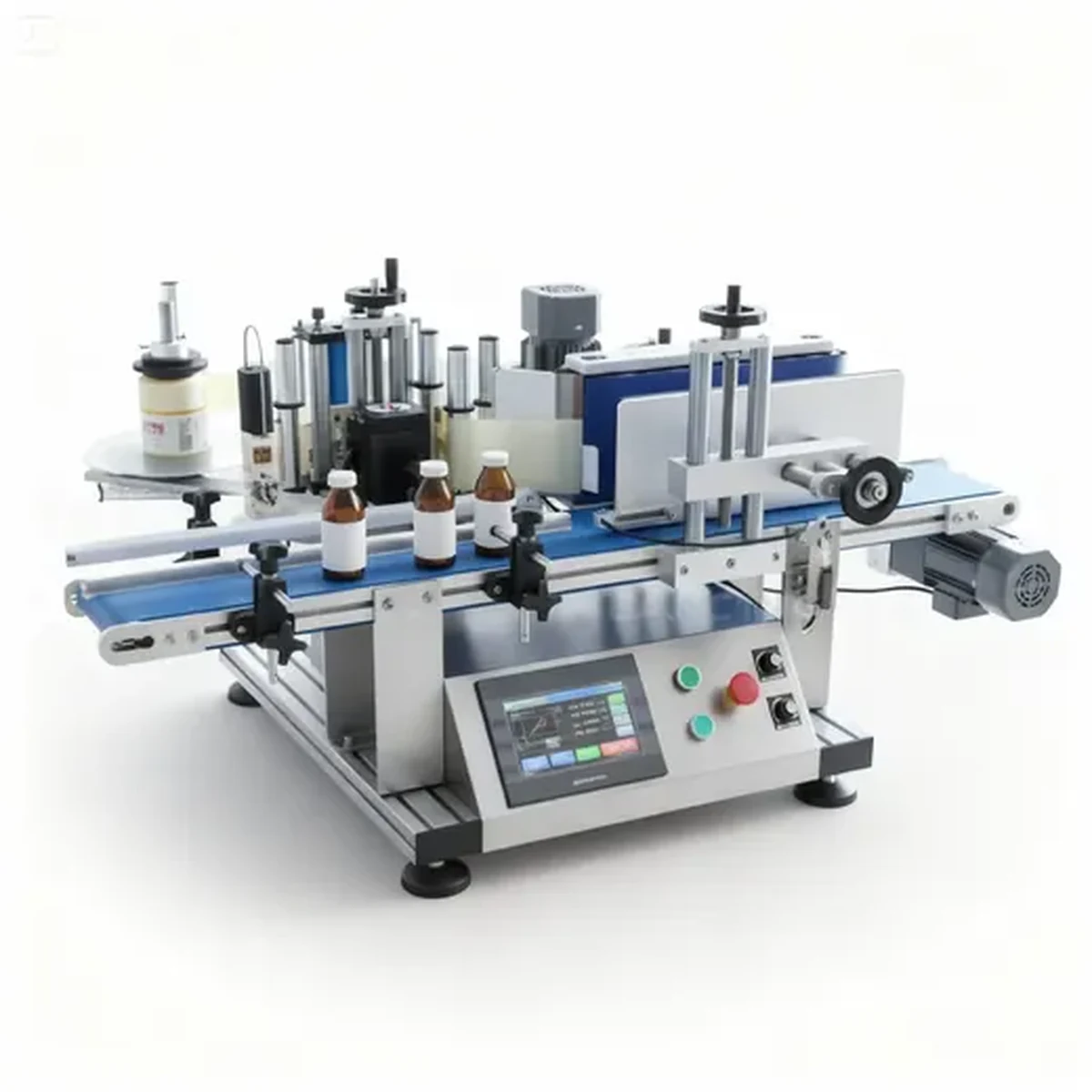
Self-adhesive and wet glue labelling are different technologies. Most compact and automatic wraparound label applicators for mixed products use pressure-sensitive self-adhesive labels.
Comparison guide
Self-adhesive labels are supplied on a backing web and peeled off by the machine before application. Wet glue labelling applies adhesive during the process and is more common in some high-volume or specific packaging sectors. For many SMEs and varied product ranges, self-adhesive wraparound labelling is simpler to specify and change over.
Flexible, clean and suited to a wide range of products and label materials.
Can suit certain high-volume applications but needs different machinery and glue handling.
Consider batch size, label material, pack appearance and production environment.
Practical comparison
| Factor | Self-adhesive | Wet glue |
|---|---|---|
| Changeover | Usually straightforward | Can be more involved |
| Label supply | Roll labels on backing web | Cut labels or different supply format |
| Cleanliness | No wet adhesive system | Requires glue management |
| SME suitability | Common choice | Depends on volume and application |
| Label materials | Paper, film, clear options | Application-specific |
Specification advice
Review the actual container shape, diameter, label panel and surface finish. A label applicator works best when the pack is stable and the label area is predictable.
Confirm label material, roll direction, label gap and adhesive before ordering production labels. Clear, film or metallic labels may need extra testing.
Decide whether the operation is batch-fed, compact automatic or part of a conveyorised filling and capping line. The best machine is the one that fits the full process.
Related searches
These internal links help users and search engines understand the related machine types, applications and specification topics.
Read more about knowledge centre and compare it with the wider Lancing wraparound labelling range.
Read more about wraparound labelling machine buyer guide and compare it with the wider Lancing wraparound labelling range.
Read more about specification checklist and compare it with the wider Lancing wraparound labelling range.
Read more about label roll direction guide and compare it with the wider Lancing wraparound labelling range.
Read more about diameter and label length guide and compare it with the wider Lancing wraparound labelling range.
Read more about output speed guide and compare it with the wider Lancing wraparound labelling range.
Read more about troubleshooting guide and compare it with the wider Lancing wraparound labelling range.
Read more about label applicator faq and compare it with the wider Lancing wraparound labelling range.
Read more about automatic wraparound labeller and compare it with the wider Lancing wraparound labelling range.
Read more about compact wrap-around labeller and compare it with the wider Lancing wraparound labelling range.
Read more about semi-automatic wrap-around labeller and compare it with the wider Lancing wraparound labelling range.
Read more about all wraparound labellers and compare it with the wider Lancing wraparound labelling range.
Questions
Yes, the wraparound label applicators on this site are focused on self-adhesive labelling.
It depends on volume, label type and machine setup, so both label cost and equipment cost must be considered.
Self-adhesive labelling is often more flexible for varied products and shorter runs.
Quick enquiry
Include container diameter, label size, material, target output and whether the label is paper, film or transparent. Lancing can recommend a suitable semi-automatic, compact or automatic configuration.
Phone: 01494 623015
Email: sales@lancinguk.com