
Container schedule
- Unique format or SKU reference
- Diameter, height and label-panel position
- Material, rigidity, filled weight and base
- Taper, seams, mould marks and closure features
Procurement and engineering
A user requirement specification, or URS, should describe what the labelling system must achieve for the buyer’s products and production process. It should define the container and label range, accepted output, placement quality, changeover, integration, operator, documentation and acceptance needs without prescribing an unsupported machine design.
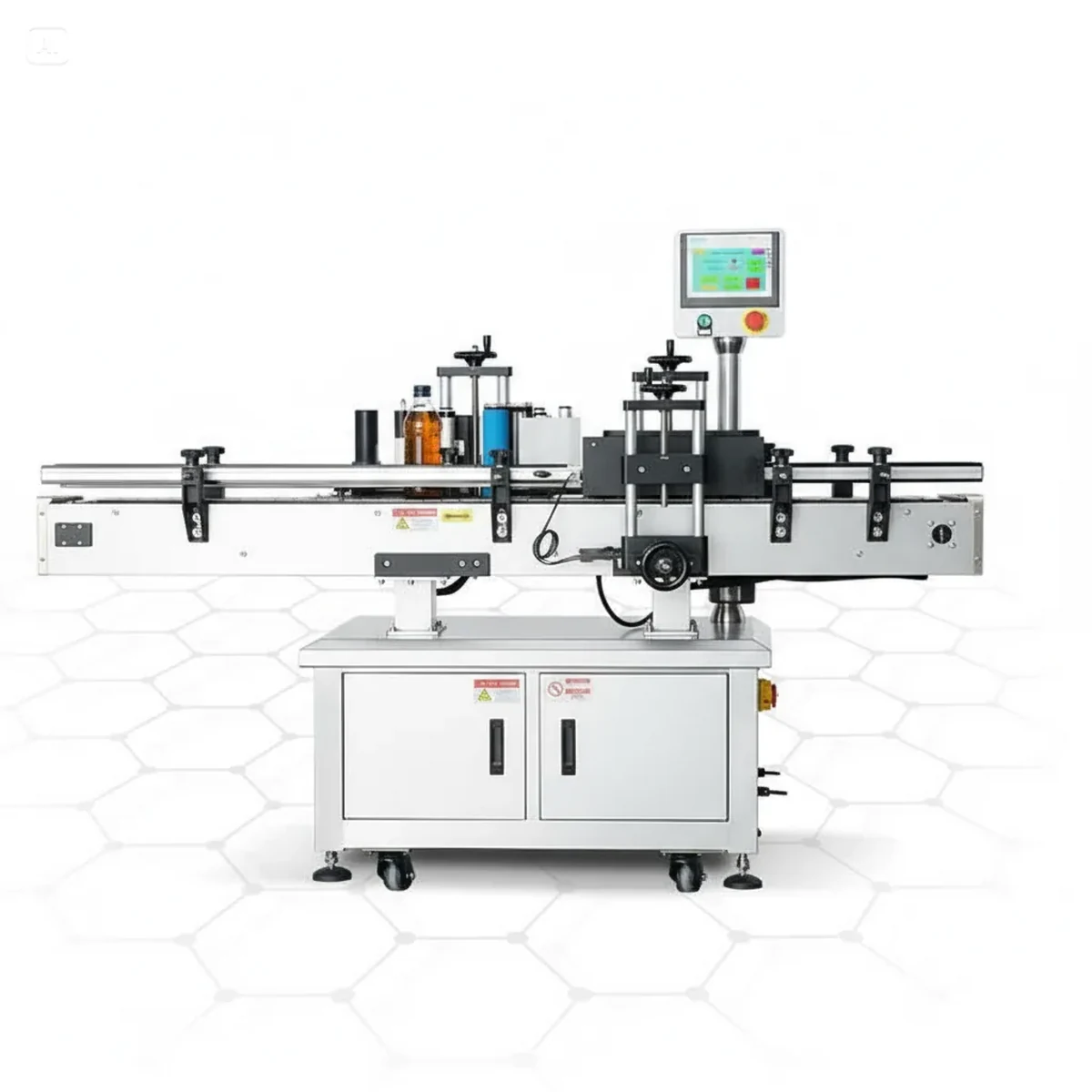
URS structure
A useful URS separates mandatory requirements from preferences and gives each requirement enough context to be checked. It should not copy a supplier brochure or combine several unrelated expectations into one vague sentence.
| URS section | What to define | How it becomes testable |
|---|---|---|
| Intended use | Products, industries, production area and purpose of the labeller. | Scope statement and approved format list. |
| Containers and labels | Dimensions, materials, range extremes, label construction and roll details. | Identified samples and drawings linked to each requirement. |
| Performance | Accepted output, placement, wrap quality, coding and reject handling. | Named test conditions and measurable acceptance checks. |
| Operation and changeover | Staffing, access, recipes, tools, cleaning and format-change expectations. | Observed operator tasks and recorded setup repeatability. |
| Integration and utilities | Conveyor, controls, data, coding, inspection and site interfaces. | Interface schedule, layout and signal test. |
| Documentation and acceptance | Manuals, drawings, training, FAT, site checks and handover records. | Document list and acceptance protocol linked back to the URS. |
Buyer question
A wraparound labelling machine URS is the buyer’s controlled statement of what the system must do, the formats it must handle and the conditions under which it will be accepted. It gives suppliers a common basis for quotation and provides traceability from the original need through design review, testing, installation and handover.
The URS should focus on required outcomes rather than prematurely specifying the supplier’s mechanical solution. For example, state the required container range, label position and accepted output under defined conditions; do not assume a particular spacing or wrap mechanism unless that choice is genuinely mandatory. Numbering individual requirements makes clarification and acceptance easier.
Use the machine specification checklist to collect the raw application information before drafting formal requirements.
Buyer question
The URS should include every format the machine is expected to run at handover, with the smallest, largest and most difficult examples clearly identified. Record container dimensions, material, filled weight, taper and stability together with label dimensions, material, liner, gap, roll core, roll diameter and winding direction.
Link each requirement to an identified sample or drawing so later revisions can be controlled.
Buyer question
Output and label quality should be written with the conditions that make the result meaningful. Define the container, label, coding, operator, run duration, stops, rejects and acceptance method. A speed figure without these conditions can be interpreted differently by the buyer and supplier and cannot reliably confirm accepted production capacity.
Separate the machine cycle or conveyor rate from accepted labelled output. Define how placement height, skew, seam position, overlap or gap, wrinkles, bubbles, edge lift and code readability will be checked. Where a numerical tolerance is required, it must come from the buyer’s approved pack requirement or a verified trial rather than being guessed.
The accepted output guide and placement quality guide provide suitable evidence categories.
Buyer question
The URS should define the required conveyor and controls interfaces, coding and inspection boundaries, utilities, access, operating environment, documentation and training. It should also state who is responsible for the final installed risk assessment and site interfaces. Application-specific safety and regulatory requirements must be confirmed by competent parties for the actual installation.
Use the line integration guide and installation guide to develop the interface schedule.
Buyer question
The URS gives every bidder the same requirement baseline and lets the buyer compare where each requirement is met, qualified or excluded. The agreed requirements can then be transferred into the factory acceptance test, so the test proves the intended use rather than demonstrating only a convenient sample or nominal machine cycle.
Create a response matrix with one line for each URS requirement. The supplier can identify the proposed solution, evidence, clarification or exception against that line. Before FAT, map the accepted requirements to test steps and records. Any requirement that cannot be tested at the factory should have a defined site or document-verification route.
Continue with the FAT and acceptance guide and the quotation factors guide.
Quick enquiry
Include container diameter, label size, material, target output and whether the label is paper, film or transparent. Lancing can recommend a suitable semi-automatic, compact or automatic configuration.
Phone: 01494 623015
Email: sales@lancinguk.com